Lanzarote · Where to live · 8 min
Playa Blanca, Lanzarote: The Harbour Town at the Island's Southern Edge
At the dry southern tip of Lanzarote, a former fishing hamlet has grown into the island's calmest resort town — and still lands octopus a few metres from the sun loungers.
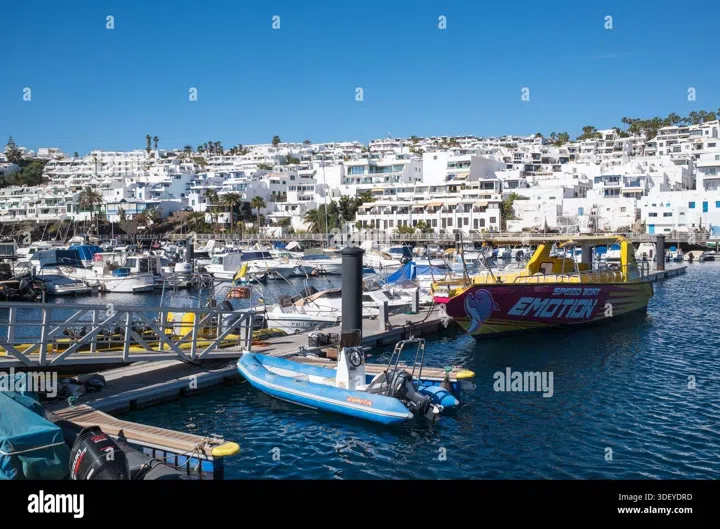
The ferry to Corralejo pulls away from the same jetty where Playa Blanca's boats once unloaded the day's catch, and twenty-five minutes later it is tying up in Fuerteventura. That one detail explains most of this town at the dry southern tip of Lanzarote: it is a working harbour that grew a resort around itself, not a resort that happens to own a harbour. Small boats still land octopus and vieja — parrotfish — a short walk from where families are claiming loungers for the morning. Everything here sits lower and reads warmer-toned than Puerto del Carmen up the coast, and the whole place is organised around a long seafront promenade rather than a strip.
What Playa Blanca is known for
The town began as a small fishing settlement at the island's southern point, and the odd, rather wonderful thing is that the fishing never moved out to make room for the hotels. The harbour where that trade still happens sits right in the middle of the old town, a few minutes from the main beach. Everything else grew up around it — the promenade first, then the resort hotels spreading west towards Marina Rubicón, then the apartment blocks behind them, all of it staying politely low to the ground.
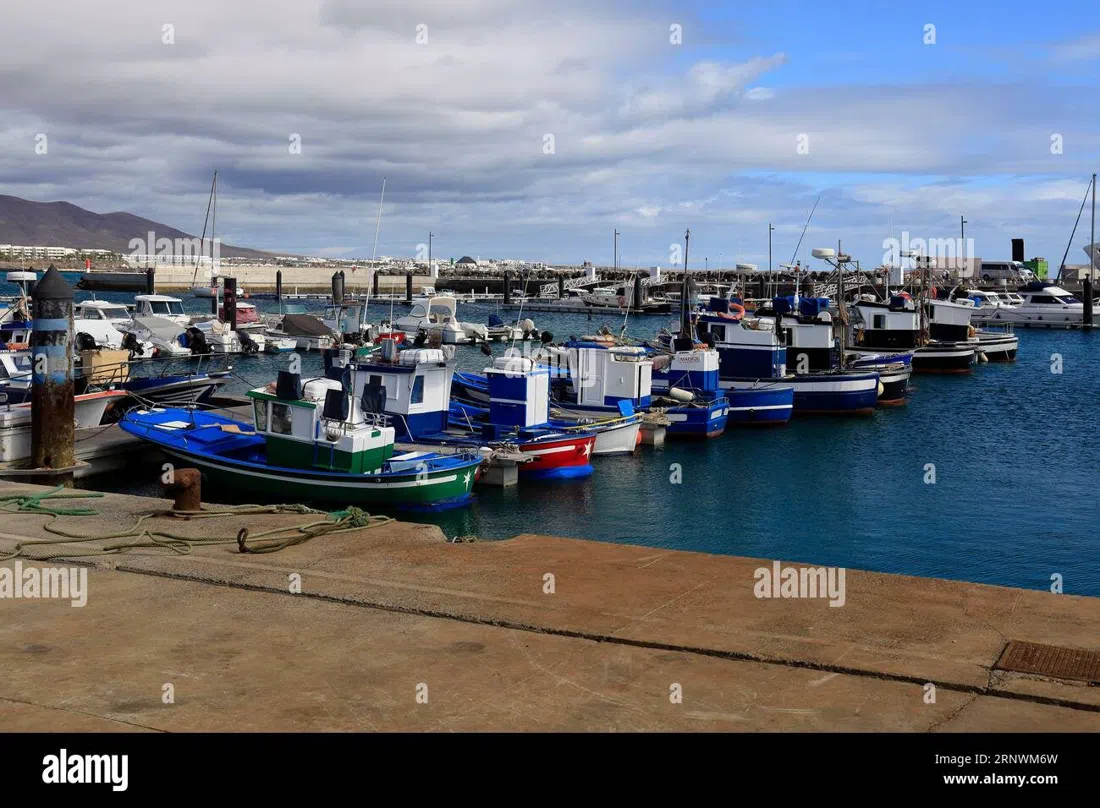
Playa Blanca beach itself is small and Blue Flag-rated, tucked into the old town and ringed by bars, which means you can swim, towel off and be holding a coffee within four minutes. That compression is the town's defining quality. It is the grown-up end of Lanzarote's coast, and it knows it: couples and families who want calm water and short walks, divers and snorkellers heading out to Museo Atlántico and the Papagayo coves, island-hoppers timing the Corralejo crossing, and anyone who wants the island's best fish without driving up to Arrecife.
It is emphatically not for late-night clubbers. Outside the peak summer weeks the town closes down early, and if your holiday depends on reaching the Papagayo coves independently without a car or a bike, you will spend a lot of the week frustrated. Everyone else gets a town where the loudest thing after midnight is usually the sea.
Where to eat and drink
The eating splits neatly along the seafront. The harbour end does unpretentious fresh fish; Marina Rubicón does the dressed-up version with a yacht-deck view. Both ends are walkable from most hotels in the centre, which is a gift — you can decide at seven o'clock which version of the evening you want.
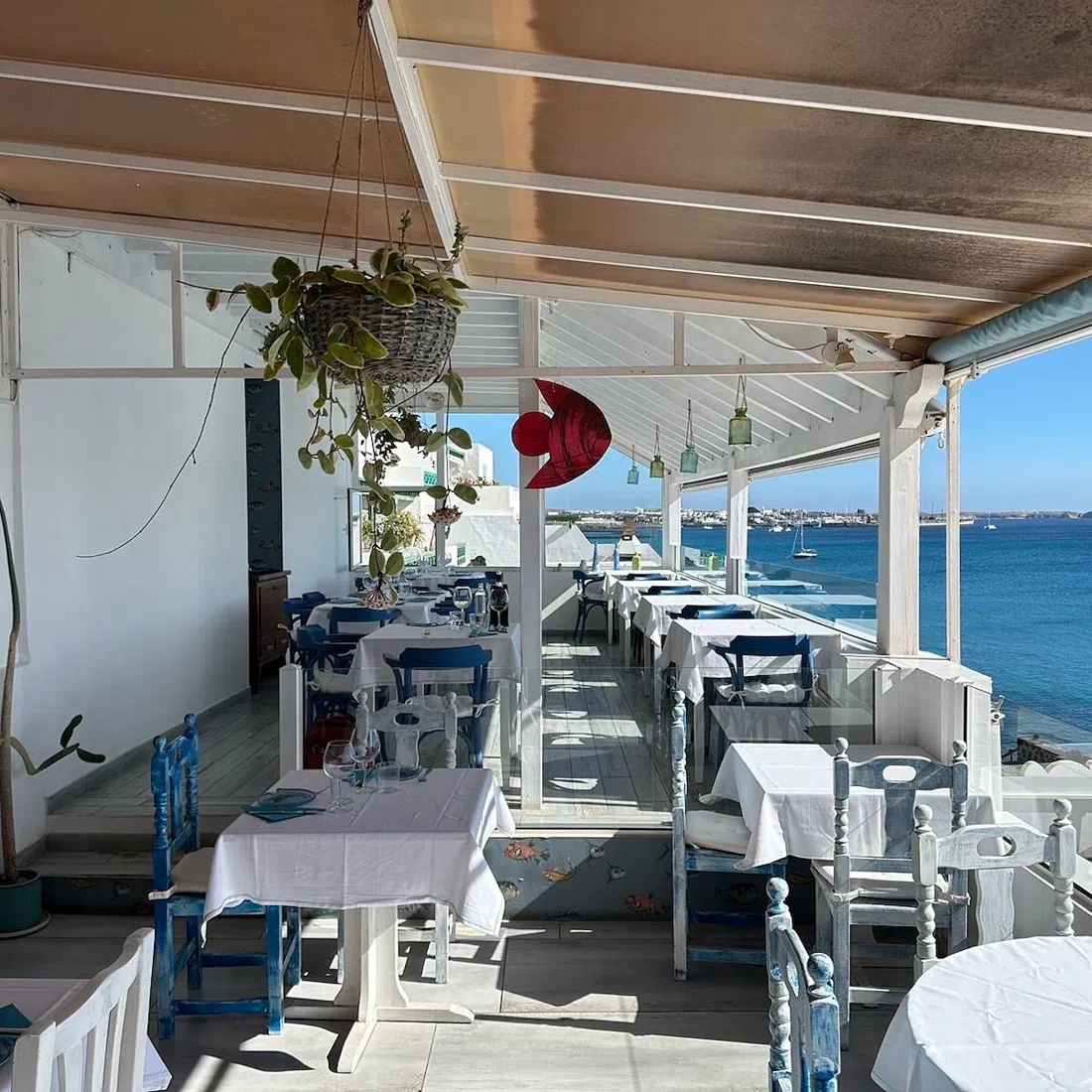
Start where the locals start. Sergio, on Calle Limones overlooking the old harbour, is the pick for grilled fresh-caught fish and seafood, and its 4.8 rating is not an accident: the terrace looks straight down at the boats that supply it, and the kitchen's instinct is to do as little to a fish as possible.
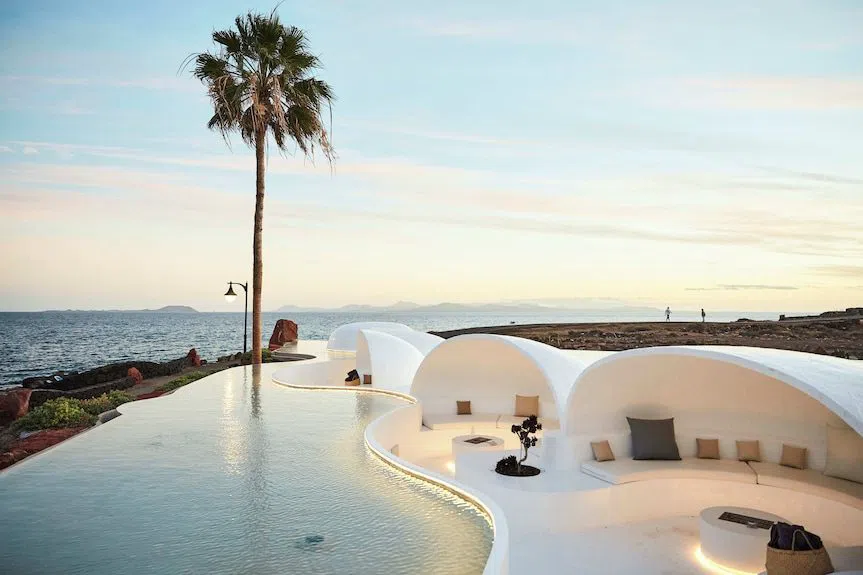
Walk west along the promenade and the register changes. At the top of the island's dining order sits Kamezí, inside Kamezí Boutique Villas — Lanzarote's only Michelin-starred restaurant, and a single tasting menu built on local produce. At €180 it is a deliberate occasion rather than a casual Tuesday, and it rates 4.7 from people who went in knowing exactly that.
Marina Rubicón is where the town does sunset properly. Casa Carlos works the seafood-and-steak axis with views over the moored yachts, and it is the sort of 4.6-rated place where a long dinner quietly becomes a long evening as the light goes orange on the masts.
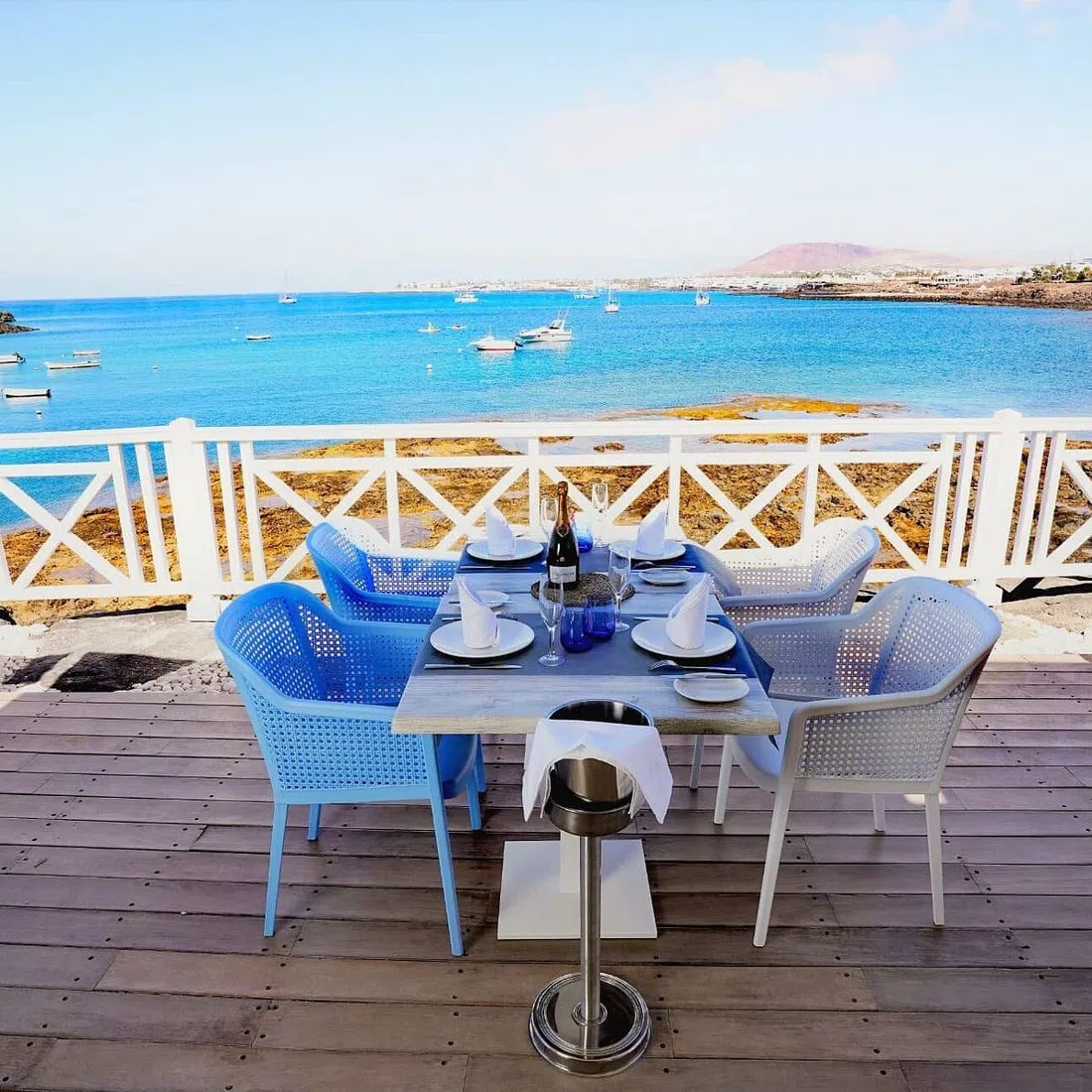
For the hour before or after, Cafe Terreza is the marina-front answer — mojitos, a 4.6 rating and the best harbour people-watching in town, which in Playa Blanca means crews hosing down decks and children running the colonnades. Budget-wise, the town is honestly mid-range: pub meals and chain cafés land around €10-15 a head, marina restaurants €30-50, and Kamezí occupies its own bracket entirely.
Nightlife
Playa Blanca is not a late-night town, and that is by design rather than by failure. Most visitors are families or couples who have eaten by nine and are back on a hotel balcony by eleven, and the town has arranged itself around that rhythm with no apparent regret.
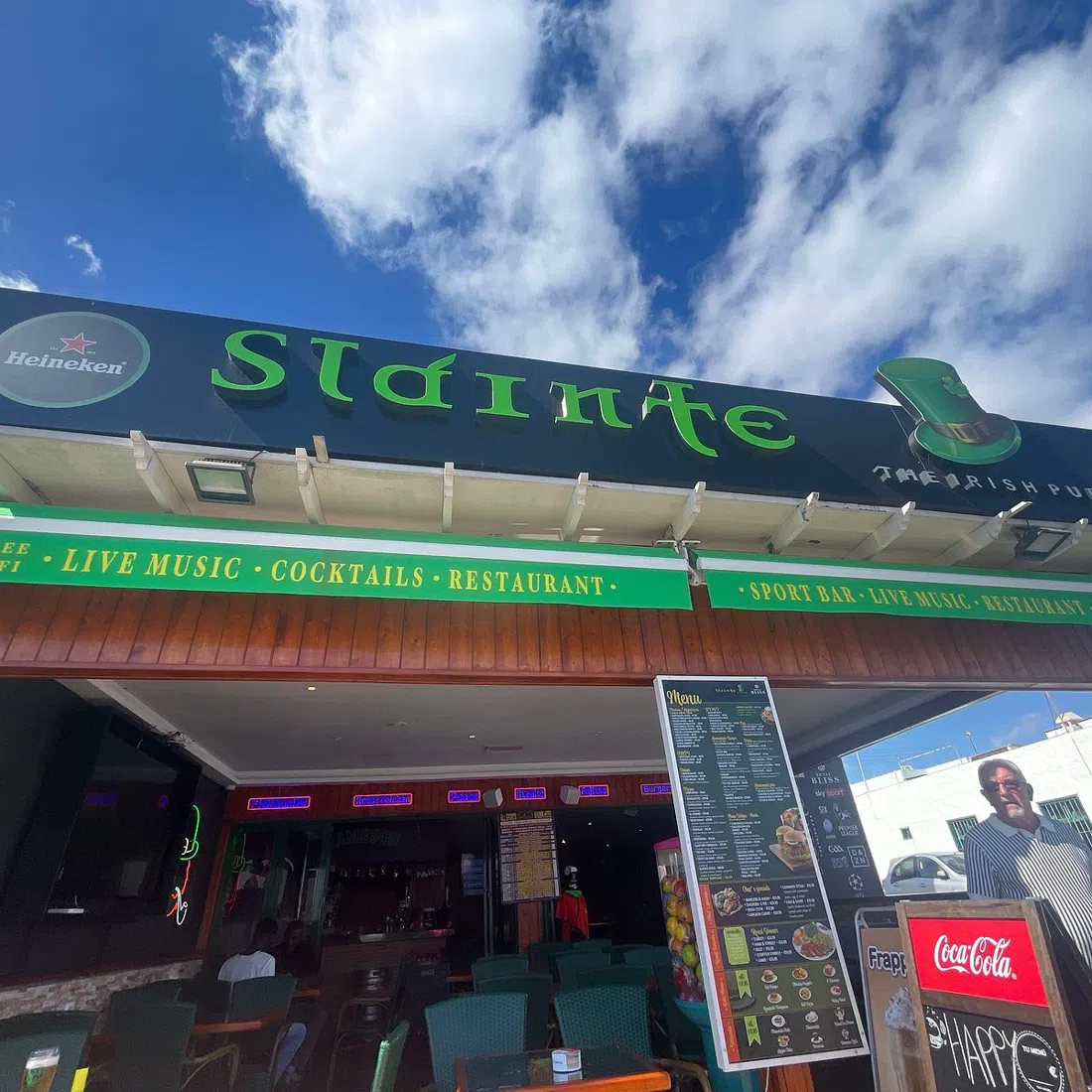
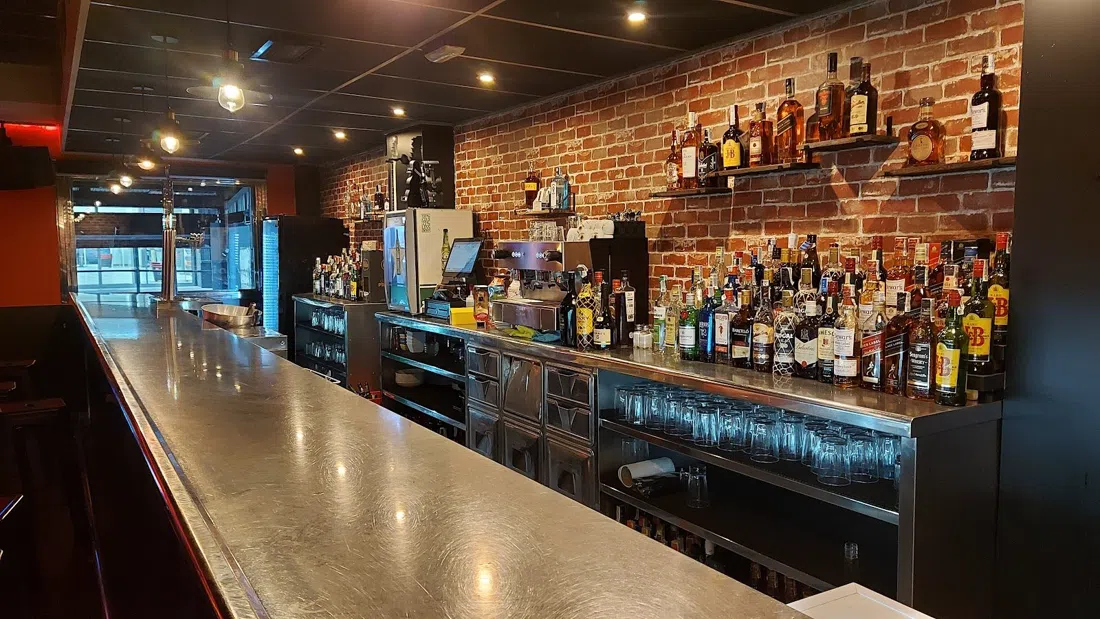
The closest thing to a nightlife strip runs along Avenida de Papagayo, lined with Irish and British-run pubs. Slainte The Irish Pub is the fixture — a terrace, Guinness, live sport on, and the kind of 4.5-rated reliability that means you will recognise half the faces by your third night.
If you want the evening to have a little more texture, head down to the marina for The Blue Note, a jazz bar with live music, food and wine and a 4.6 rating. It is the one place in town where the night has a soundtrack somebody chose on purpose.
Things to do
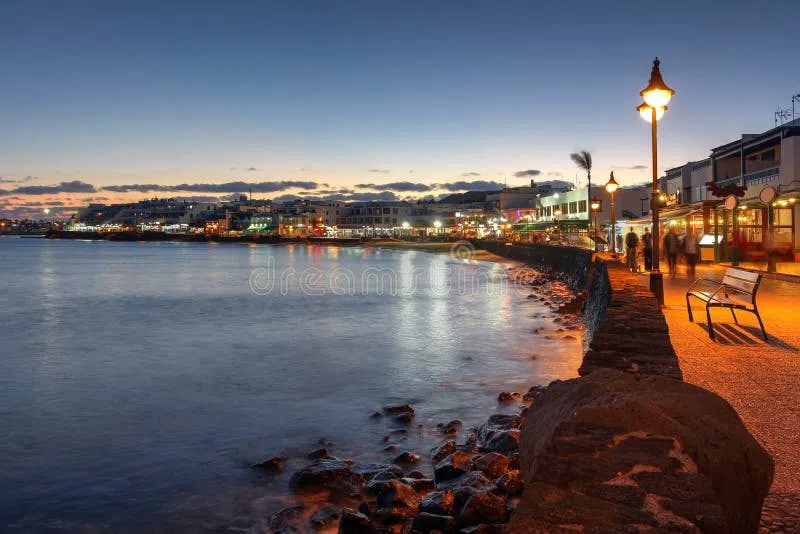
The promenade is the best free activity in Playa Blanca and arguably the best thing about it. It runs as a continuous walkable stretch linking the old harbour, Playa Blanca beach, Playa Dorada, Playa Flamingo and Marina Rubicón, with sea views the whole way, and it rewards being walked twice — once early, when it belongs to runners and the fishing boats, and once at dusk, when the whole town seems to be on it.
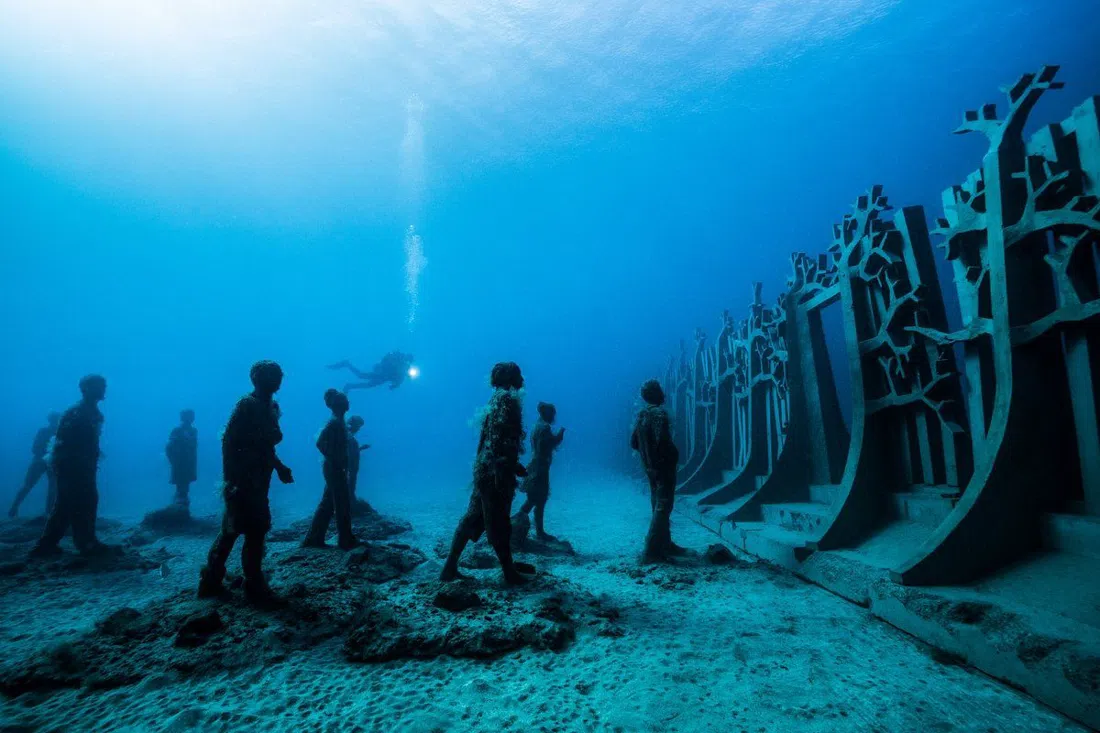
The serious draw is offshore. Museo Atlántico is Europe's first underwater sculpture museum: more than 300 submerged figures by Jason deCaires Taylor, standing on the seabed in a silence that photographs cannot quite convey. It is boat-access only, departing from Playa Blanca's harbour, and it rates 4.8 from divers who have seen plenty of reefs. Certified divers can book a guided dive from around €57; if you have never dived, an introductory package at roughly €149 includes training beforehand, and there are snorkel and semi-submarine trips with local operators for anyone who would rather stay nearer the surface.
Back on land, the Papagayo coves are the other reason people choose this end of the island — golden, sheltered, and reached by a rough, poorly marked track that genuinely warrants a car or a bike rather than optimism. The Marina Rubicón market, on Wednesdays and Saturdays, turns the yacht harbour into a browsing exercise in leather goods, wine and jewellery.
Shopping
Shopping here splits cleanly between the two ends of town, and knowing which end you want saves a walk. Marina Rubicón's colonnaded walkways hold the boutique end — clothing, jewellery and homeware shops threaded between the restaurants, so a browse naturally collapses into a drink at one of the marina terraces.
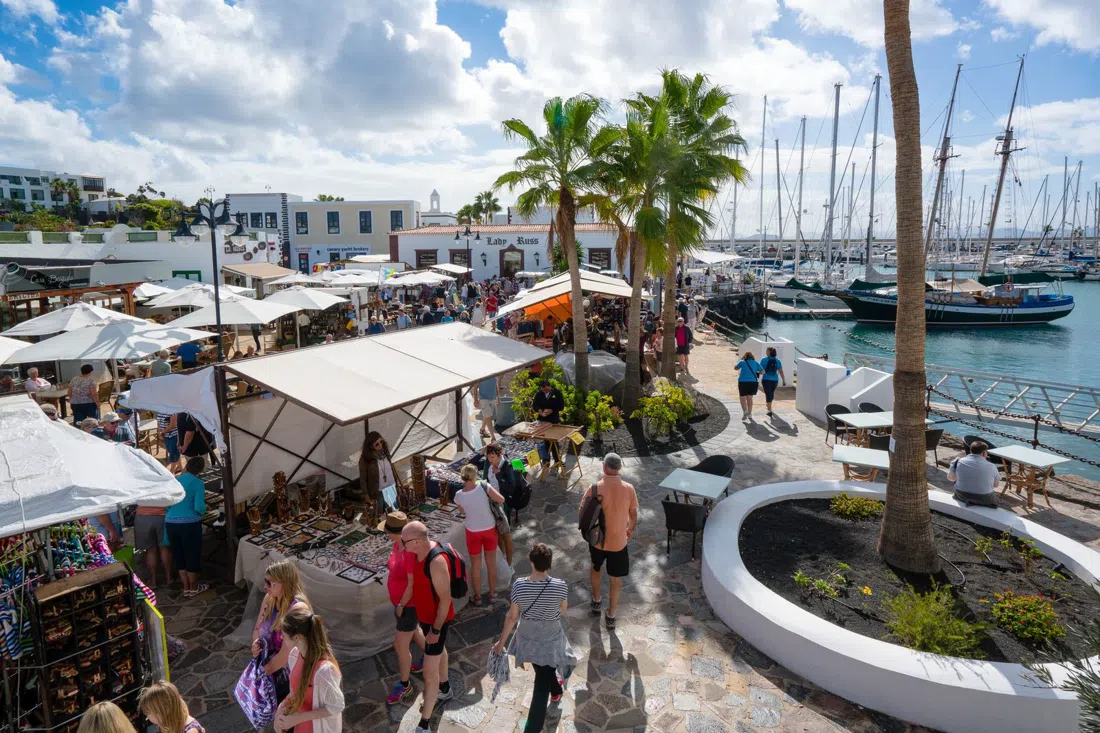
The Wednesday and Saturday street market is the one to plan around. It sets up at the yacht harbour with leather goods, local wines and handmade accessories, and at 4.4 it is a pleasant hour rather than a pilgrimage — go for the wine, stay for the people.
The old town end, around the harbour and the main beach, is more functional and more useful day to day: the practical shops that supply apartments and the bars that surround Playa Blanca beach.
Where to stay in Playa Blanca
The old town centre, around the harbour and Playa Blanca beach, is the most walkable base in town. Everything from Sergio's terrace to the ferry port and the Papagayo bus stop sits within ten minutes on foot, which makes it the obvious choice if you are not hiring a car.
Around Marina Rubicón — a 10-15 minute walk or a short drive west — you trade that immediacy for calm, boutique dining and the sunset side of the harbour. The stretch between the two, along Playa Dorada and Playa Flamingo, is where most of the resort hotels sit, close enough to the promenade that the whole town is still on foot.
Accommodation here leans towards apartments and three- to four-star hotels rather than budget hostels, which fits the demographic: self-catering families, couples on a week, divers who want somewhere to hang a wetsuit. Crime is very low, the promenade is well lit, the swimming beaches are calm with lifeguard flags in season, and the two real risks are Lanzarote's near-constant UV and that unmarked Papagayo track.
Getting around
There is no train or tram. The island's Intercity bus network, run by Arrecife Bus, and a hire car are the two realistic options, and which you need depends entirely on how far you plan to roam.
From Lanzarote Airport (ACE), bus 161 reaches Playa Blanca in around 55 minutes and stops near the ferry port; the 162-D express cuts that to roughly 45 minutes. A taxi or hire car does the same run south in 30-40 minutes. Within the town itself you will barely need either — the promenade does the work, linking the harbour, the beaches and Marina Rubicón end to end.
A car earns its keep for two things: the Papagayo coves, and day trips further afield like Timanfaya. For the ferry to Corralejo, the crossing takes 25-35 minutes and runs up to 26 times a day across three operators, with fares from about €17. Arrive at least 90 minutes early in summer, and treat that as non-negotiable if you are bringing a vehicle — it is a short hop, but the queue is not.
24 October 2026