Lanzarote · Where to live · 7 min
Teguise, Lanzarote: Six Quiet Days and One Loud Sunday in the Island's First Capital
Lanzarote's original capital trades 300 market stalls and a brass band on Sunday for six days of shuttered calm — here's how to read it, eat it and stay in it.
By nine on a Sunday morning there are more than 300 stalls wedged into Teguise's cobbled lanes and squares — lava-rock jewellery laid out on one trestle, wheels of local cheese on the next, leather goods hanging up like bunting — while a brass band works through its repertoire from the bandstand in Plaza de la Constitución.
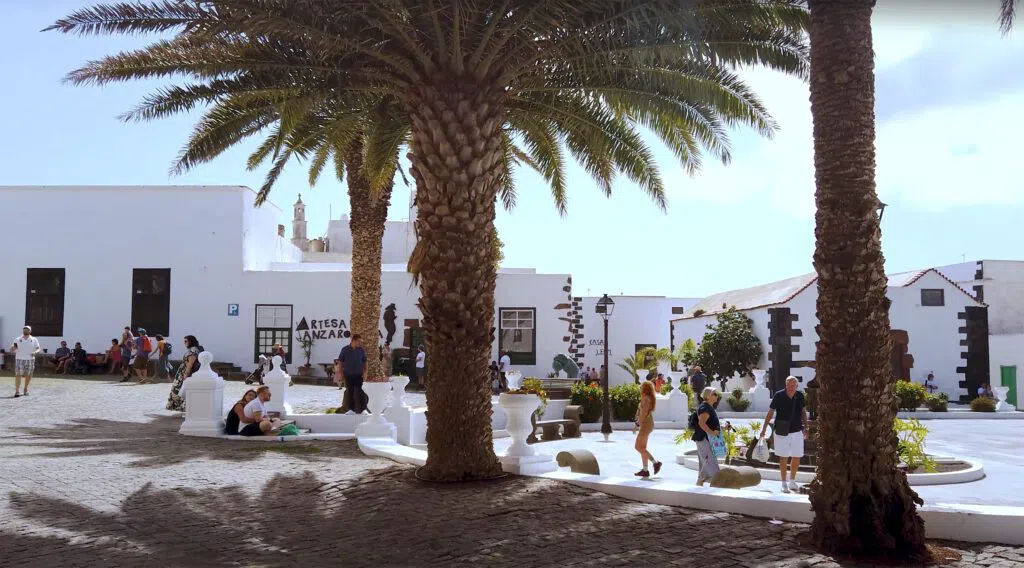
Come back on a Tuesday and you will struggle to believe any of it happened. Half the shopfronts keep their shutters down, old men play dominoes in the shade of the church, and the loudest thing most afternoons is the wind coming off the volcano. Lanzarote's first capital does not perform for visitors the other six days of the week, and that gap between the Sunday and the silence is the real reason to come.
Lanzarote's first capital, and its Sunday market
Teguise was founded in the early 1400s and served as the seat of island government until 1852 — which means it held the capital's title for longer than Arrecife has held it since. The arithmetic is less interesting than what it left behind. The street plan around Plaza de la Constitución is still the old one: narrow lanes lined with volcanic-stone houses under thick lime-wash, flat roofs, doorways that open straight onto the cobbles. Nothing in this centre was built for an audience. It was built for a small inland town that happened, for four centuries, to run an island.
Anchoring the main square is the Iglesia de Nuestra Señora de Guadalupe, a 15th-century church whose red-brick bell tower is the first thing you see on the approach road and the thing you keep orienting yourself by once you are inside the grid of lanes.
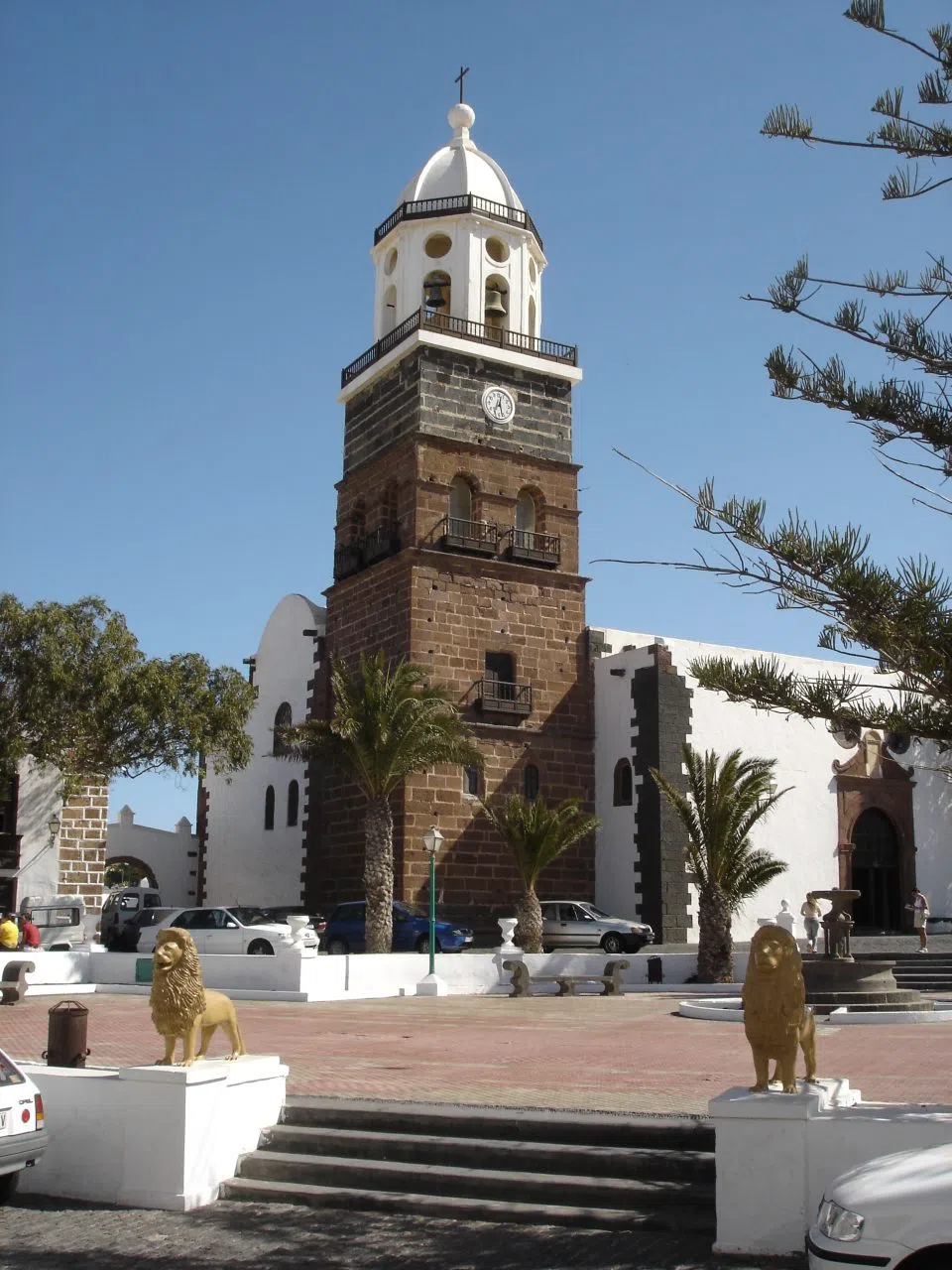
Sit on the steps for ten minutes on a weekday and the whole character of the place arrives unprompted: the domino table, a scooter, somebody sweeping, the wind again. Walking is the only sensible way to take it in, and the cobbles are genuinely uneven in places — the single most likely hazard in what is otherwise a very quiet, low-crime village.
Where to eat in the old town
Eating here is organised around long lunches rather than long evenings. Kitchens close early most nights outside market Sundays, so the smart move is to reverse your holiday rhythm: eat properly in the middle of the day, and keep the evening light.
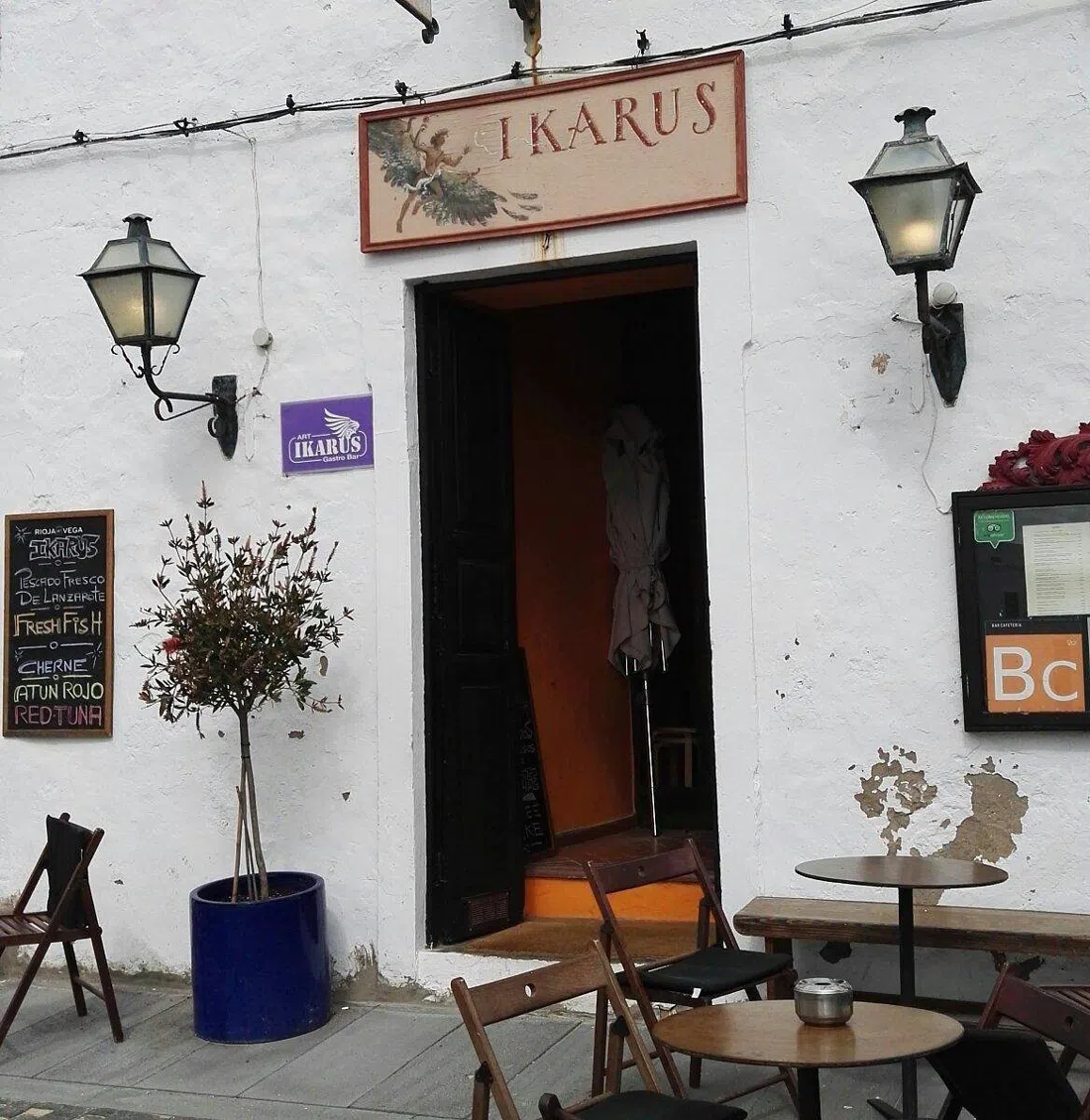
Ikarus, on Plaza Clavijo y Fajardo, is the most consistently praised address in town and the highest-rated restaurant in Teguise at 4.7. The cooking is contemporary Canarian-Mediterranean, the dining room relaxed rather than hushed, and there is a proper wine and cocktail list — which, in a town this size, is not a given.
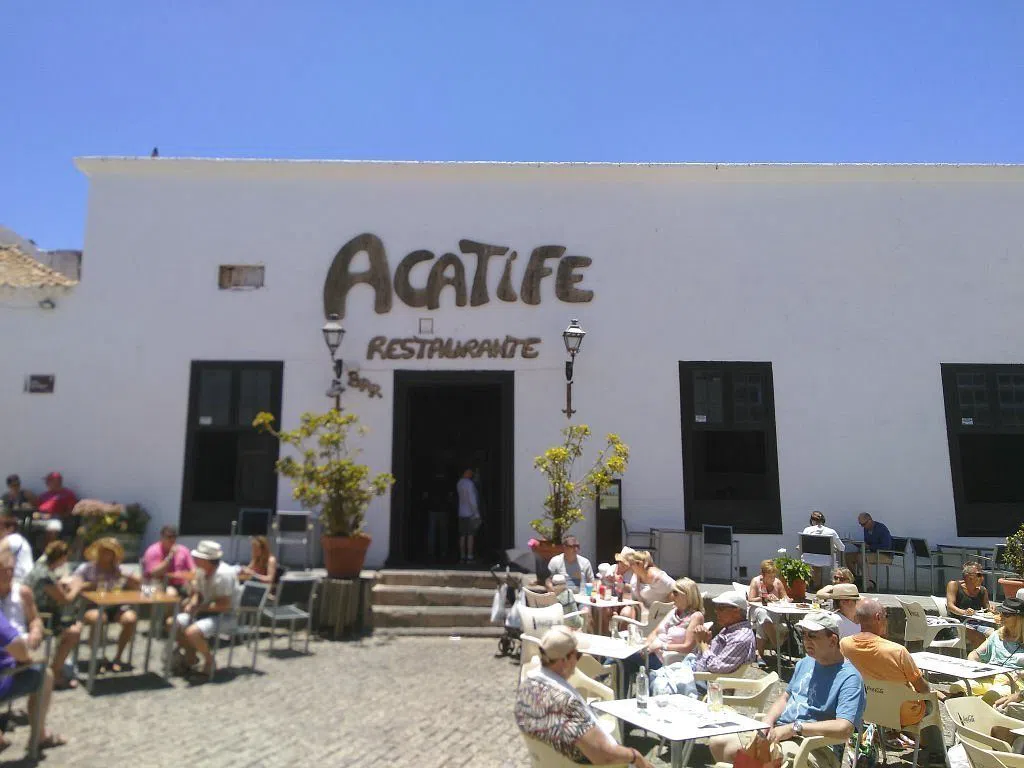
For the other end of the spectrum — the version of Teguise that existed long before anybody wrote a guide to it — there is Acatife, the town's oldest working restaurant, open since 1961 and rated 4.3. This is honest home cooking: lentils, limpets, fish croquettes. Order the limpets if you have never had them; they are about as local as a plate gets on this island, and they taste of the Atlantic rather than of a menu written for tourists.
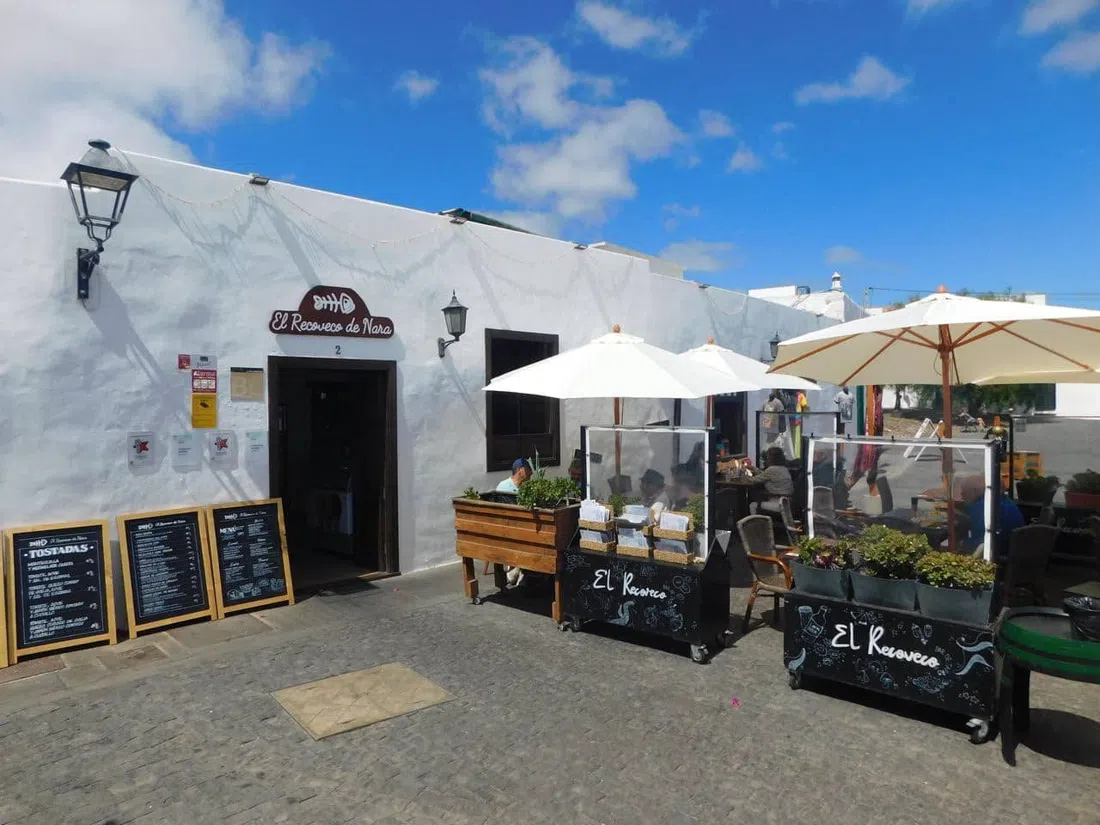
The third address is the one to book if you want the building to be part of the meal. El Recoveco de NaRa occupies a historic house dating to 1768 and cooks Mediterranean and Spanish plates, with a tasting menu if you want to hand over the decisions and unusually strong vegan options if you need them — a rarity in a region that defaults to fish and goat. It sits at 4.5.
None of this is expensive by resort standards. Tapas and mains land mostly in the €10 to €20 range, and the market stalls start at a few euros. The pricier end of Teguise is the beds, not the plates.
An early night, mostly
Be clear-eyed about this: Teguise is not where you come for a late one. That is Costa Teguise, a separate coastal resort several kilometres away with its own bar strip, its own beaches and a completely different temperament. The two share a name because Costa Teguise sits inside the municipality, and that coincidence has misled a great many bookings.
The old town's evening life is really just its restaurants running later on Fridays and Saturdays, plus whatever happens to be on. If you are staying in the centre, treat the night as an asset rather than a shortfall — the lanes empty out, the lime-washed walls go blue, and there is nothing competing with the sky. If you want bars within walking distance, base yourself on the coast and drive up here for the day.
Castles, museums and the market
The unmissable sight stands above the town rather than in it. Castillo de Santa Bárbara is a 15th-century fortress planted on the Guanapay volcano, reached by a short, steep walk or a drive, and the reward is a panorama over the whole historic centre and out to La Graciosa. Inside is the Museo de la Piratería, which tells the story of the corsair raids that shaped this town's defensive instincts — the reason a capital was built inland in the first place, out of sight of the sea. It rates 4.2.
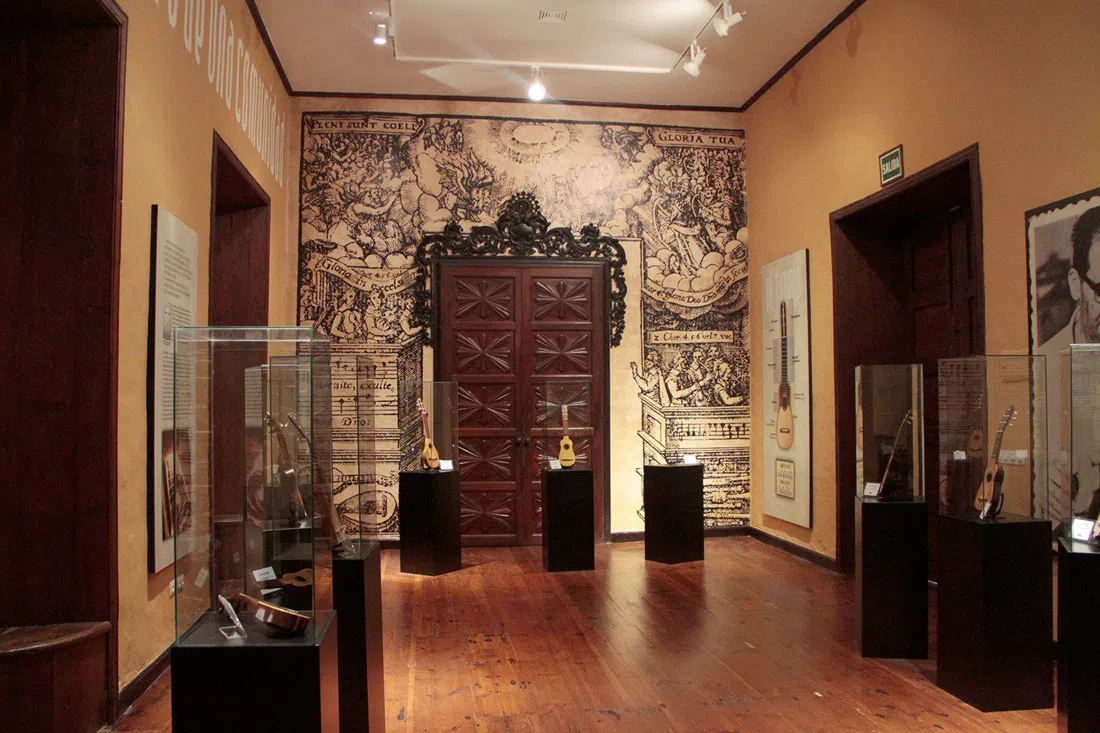
Back down in the centre, the Museo del Timple occupies the 18th-century Palacio Spínola on the main square and is dedicated to the timple, the small Canarian stringed instrument you will hear threaded through island music whether or not you can name it. At 4.4, it is the most rewarding half-hour indoors in Teguise, and the palace itself is worth the ticket.
And then there is Teguise Market, the island's largest open-air market, filling every street of the old town every Sunday from around 9am to 2pm with crafts, produce and live music. Its 3.8 rating is not a verdict on the goods so much as on the crush: coaches funnel a great many people into a very small centre. Arrive before 11am and you get stallholders with time to talk. Arrive at midday and you get a queue.
Market day, and one real workshop
Outside Sunday, Teguise is not a shopping town, and it is worth saying plainly that most of what sits around the square is souvenir-level. The standout exception is ARTeguise, a family workshop on Calle Morales Lemes that has been working lava stone, crystal, ceramics and wood into jewellery and objects since 1979. The pieces come from the people who made them, in the room where they were made, which is a different transaction from a resort gift shop.
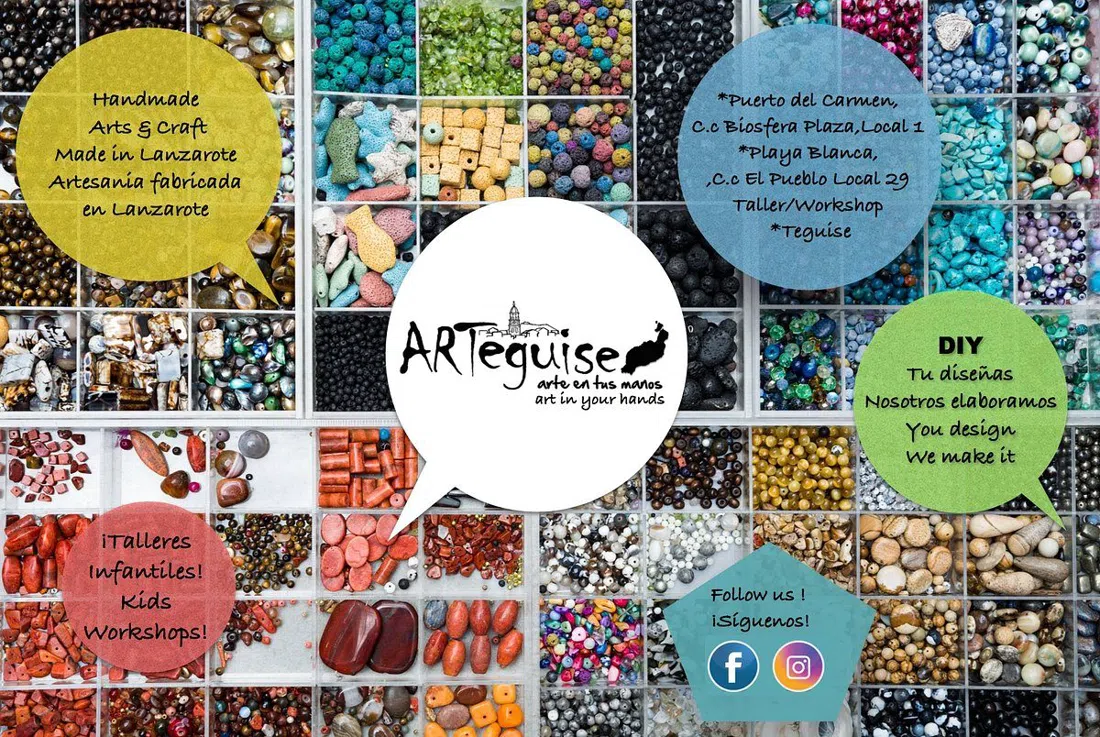
If real Canarian craft is what you came for — lava stone in particular, the island's own material — buy it here or buy it from a maker at a Sunday stall, and skip everything in between.
Where to stay in Teguise
Staying inside the old town means a handful of small boutique hotels in restored historic houses, not a resort. There is no beach on the doorstep and no promenade; this is not Costa Teguise or Puerto del Carmen, and pretending otherwise is the one way to be disappointed here.
Casa de las Flores is a five-room boutique hotel right in the centre and Teguise's highest-rated place to stay at 4.9, with a fresh breakfast made daily — the sort of operation where the numbers are small enough that somebody notices what you ate yesterday. Hotel Palacio Ico, rated 4.5, has nine rooms in a Canarian house dating to 1690 and a kitchen with Michelin recognition, which solves the evening-dining problem in a town that otherwise closes early; it is adults-only.
Both sit at the pricier end for Lanzarote, which is what you pay for a restored historic house with nine rooms instead of nine hundred. The honest recommendation: Teguise rewards a short, deliberate stay — two or three nights with a hire car — more than it rewards a full week.
Getting to and around Teguise
Teguise sits inland, about 13km north of both Arrecife and Lanzarote Airport (ACE) — roughly a 20-minute drive on the LZ-1 and LZ-10. Arrecife's port, the island's main harbour for inter-island and mainland ferries, is the same distance away. There is no train or tram on Lanzarote, so your options are the bus network, a taxi or your own car.
For a day trip from Arrecife you do not need a car at all: the daily Line 7 bus covers the route in about 13 minutes, and the Sunday-only Line 14 adds capacity on market day. Outside Sunday, services thin out to hourly at best, which is survivable if you have planned around it and tedious if you have not. There is no direct public transport from the southern resorts, so a hire car or a taxi is the practical route unless you are coming on a Sunday.
Once you are here, everything is on foot — the historic centre is small, and the castle is a short, steep climb above it. Two caveats: those cobblestones, again, which are hard work in the wrong shoes, and market-day traffic, when pedestrians and coaches compete for the same handful of lanes. Park on the edge, walk in, and let the town be as slow as it wants to be.
24 October 2026