Tenerife · Where to live · 8 min
El Médano, Tenerife: The Wind-Blown Town That Refuses To Be A Resort
Five minutes from Tenerife South Airport, a scruffy, sail-stippled beach town trades resort polish for trade wind, volcanic sand and the best fish on this stretch of coast.
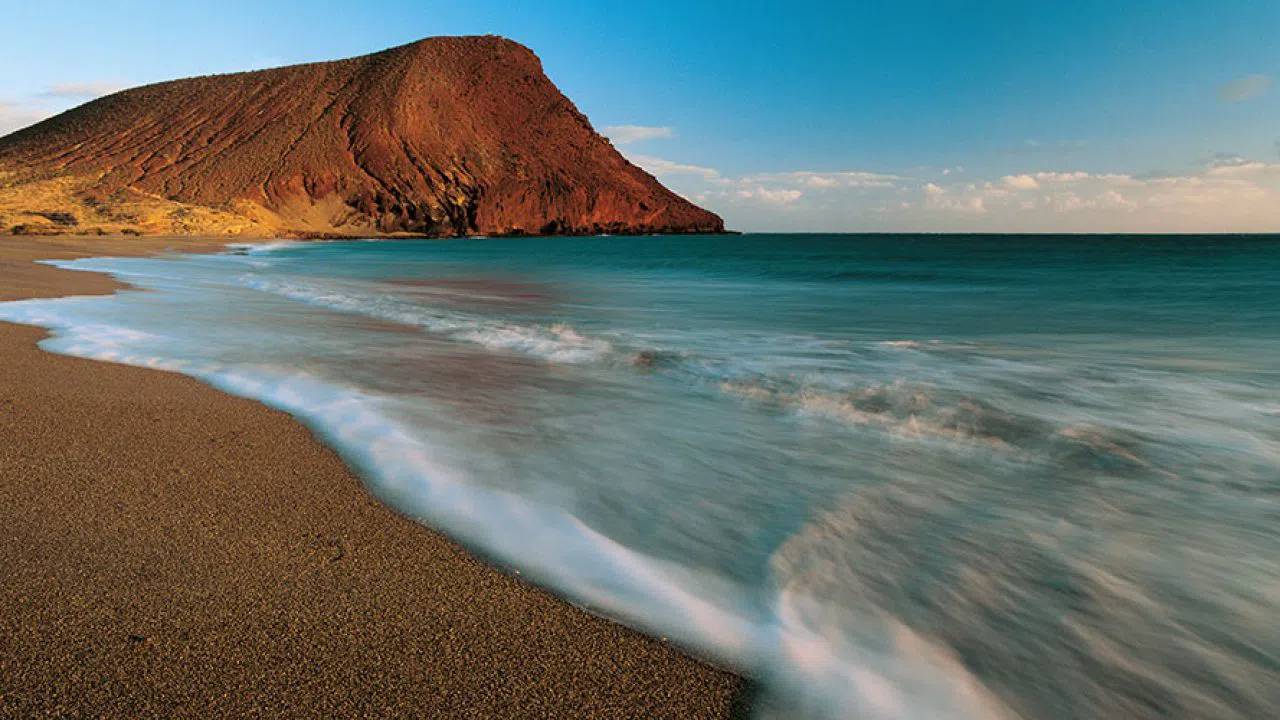
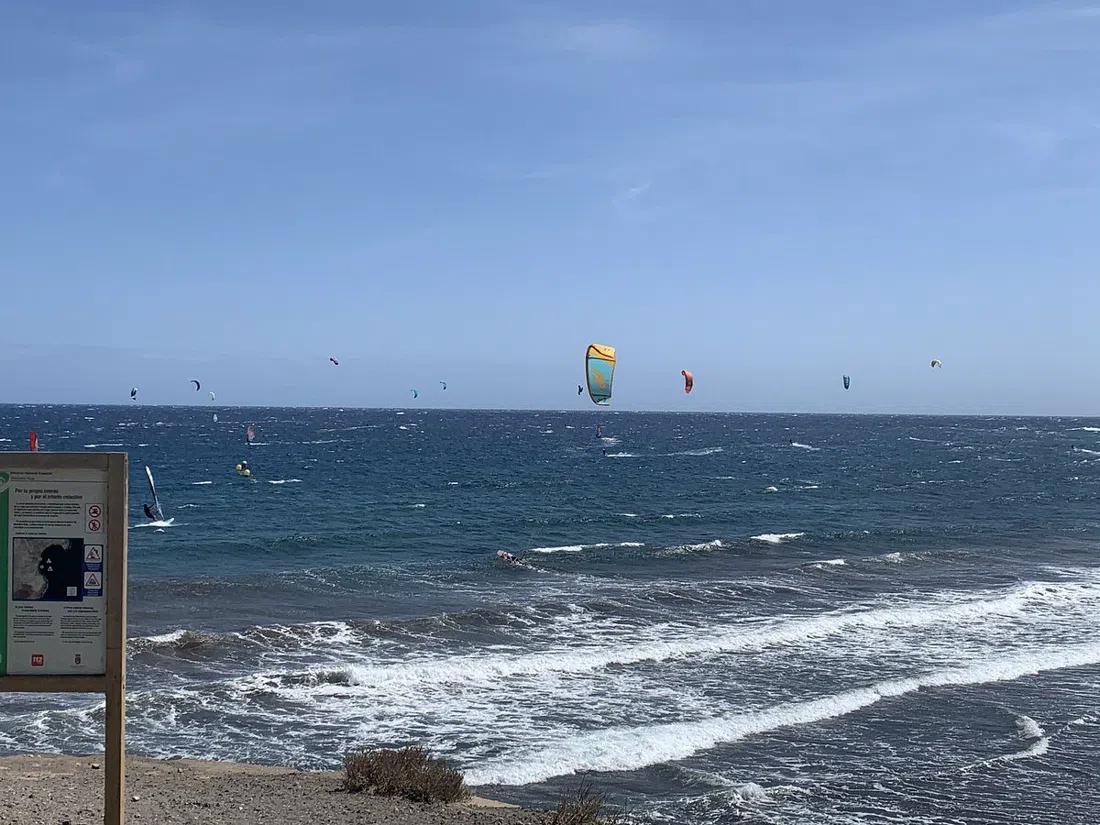
The wind gets to you before anything else does. It arrives off the north-east on roughly nine days out of ten, and here that figure isn't trivia — it's the reason the town exists at all. Under the red cone of Montaña Roja, 750 metres of grey volcanic sand run along the water, and by mid-afternoon the sea off the southern end is stippled with kite and windsurf sails, tacking and jumping and folding into the swell. Tenerife South Airport sits five minutes away. You can land, collect a bag and be standing on that sand with the trade wind flattening your shirt before the plane you arrived on has finished turning around.
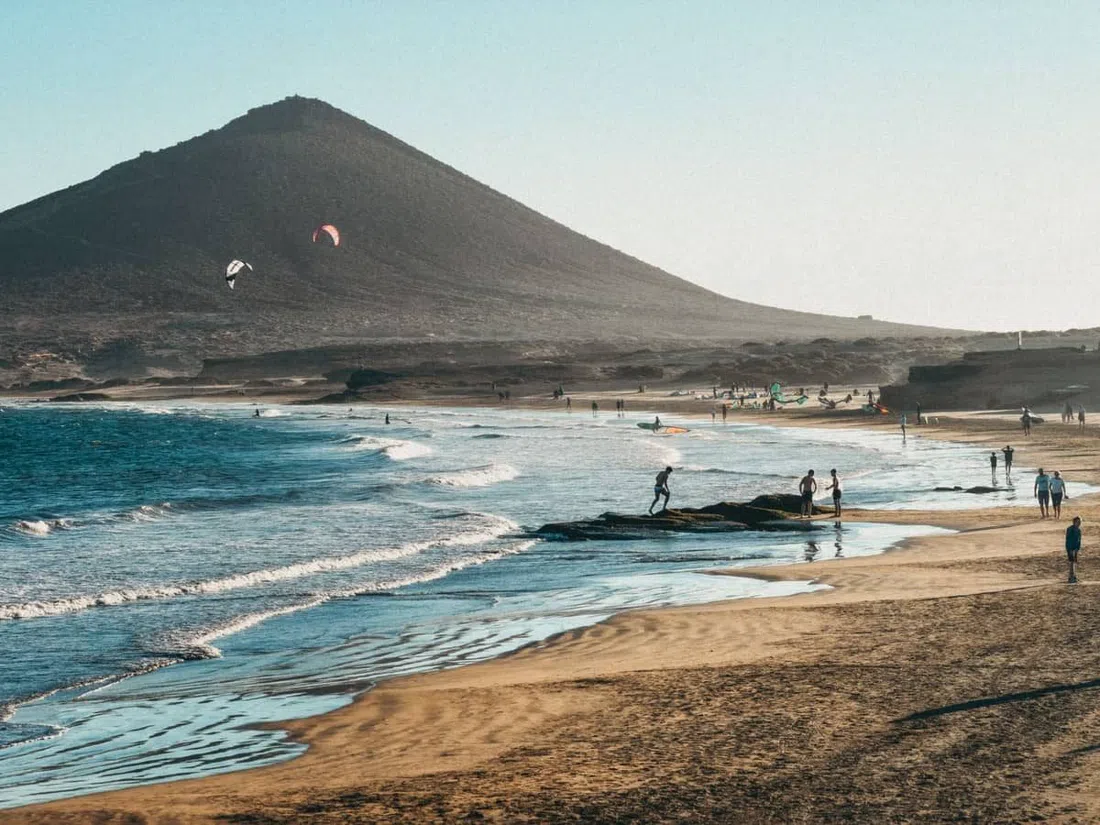
What El Médano doesn't look like is a resort, and that is the entire point of it. The seafront is low-rise apartment blocks rather than landscaped hotel grounds. The centre is scruffy and pedestrianised, the kind of place where a board bag leans against a café chair for an hour because nobody has asked it to move. The crowd is a working mix: local Canarios, windsurf instructors on long contracts, and a rotating cast of travellers who came for a fortnight and are still here in March.
What El Médano is known for
Wind, and the geography that makes it useful. The north-east trade wind crosses this stretch of Tenerife's south coast with near-mechanical reliability, and the bay has the rare courtesy of offering three distinct spots within walking distance of one another. The main Bay is the flatter, more forgiving water — the place where beginners learn and where you'll see the greatest density of sails on a strong afternoon. The Harbour Wall break is wave-driven, a step up in commitment. And El Cabezo, at the far end, is the serious one, the name you'll hear said with a certain respect in the surf shops behind the beach.
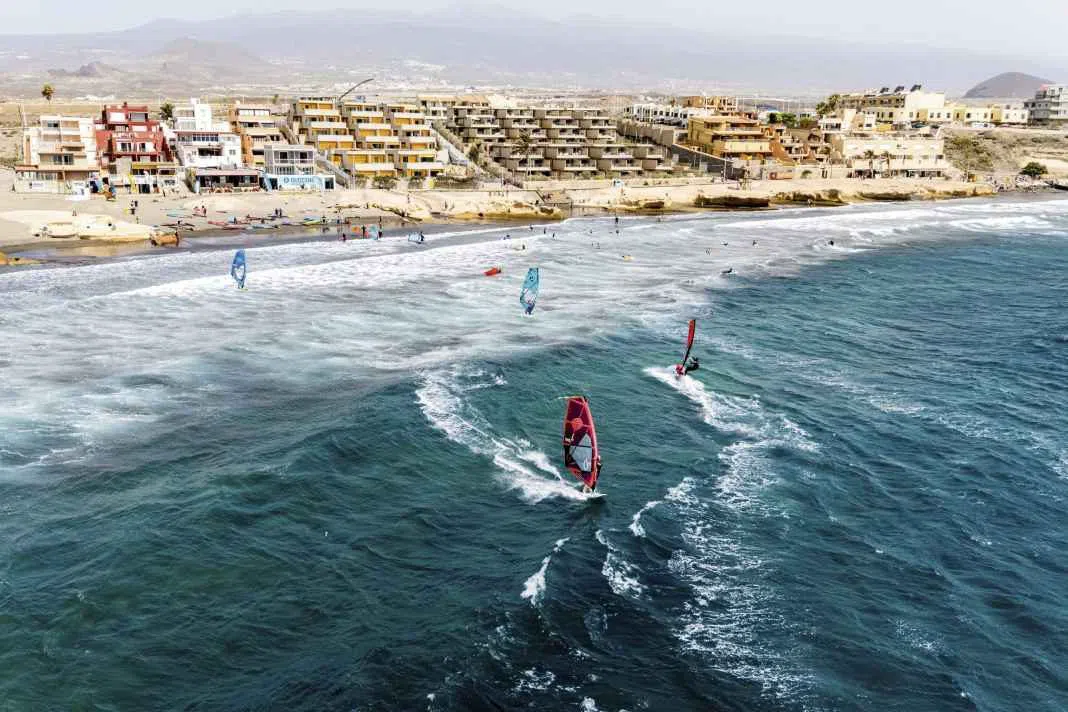
That same wind is why this isn't a universal recommendation. If your idea of a beach holiday involves a sheltered, glassy bay every single day, El Médano will frustrate you by lunchtime. The far end of the beach toward El Cabezo belongs to the windsurfers and kitesurfers, and wind-driven waves and currents can make it genuinely unsuitable for a casual swim. Check the flag colour before you go in — not as a formality, but because the sea here changes character over the course of an afternoon. The section nearest the town centre is calmer and fine on most days.
The town is also, quietly, one of the most practical bases on the island. Walkable, self-catering, unglamorous, five minutes from the terminal. For anyone with a six-in-the-morning flight, that last detail is worth more than a spa.
Where to eat and drink in El Médano
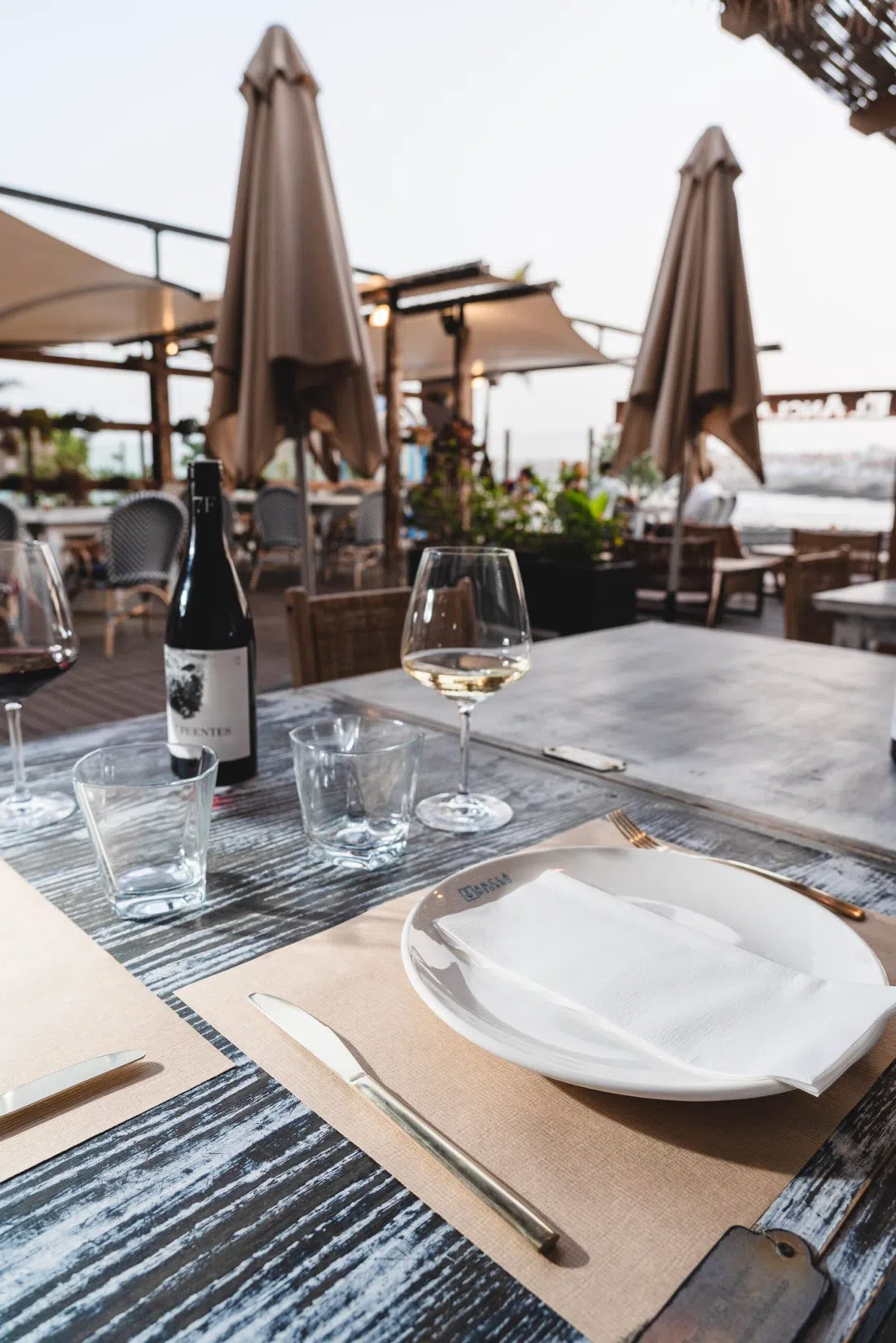
Eating here leans Canarian and fish-forward, with portions calibrated for people who have spent four hours on the water rather than for the camera. El Ancla, tucked just back from the seafront, is widely rated the most polished kitchen in town — Canarian cooking with a tighter, more considered menu than most of its neighbours, built around the day's fish rather than around a laminated list of everything.
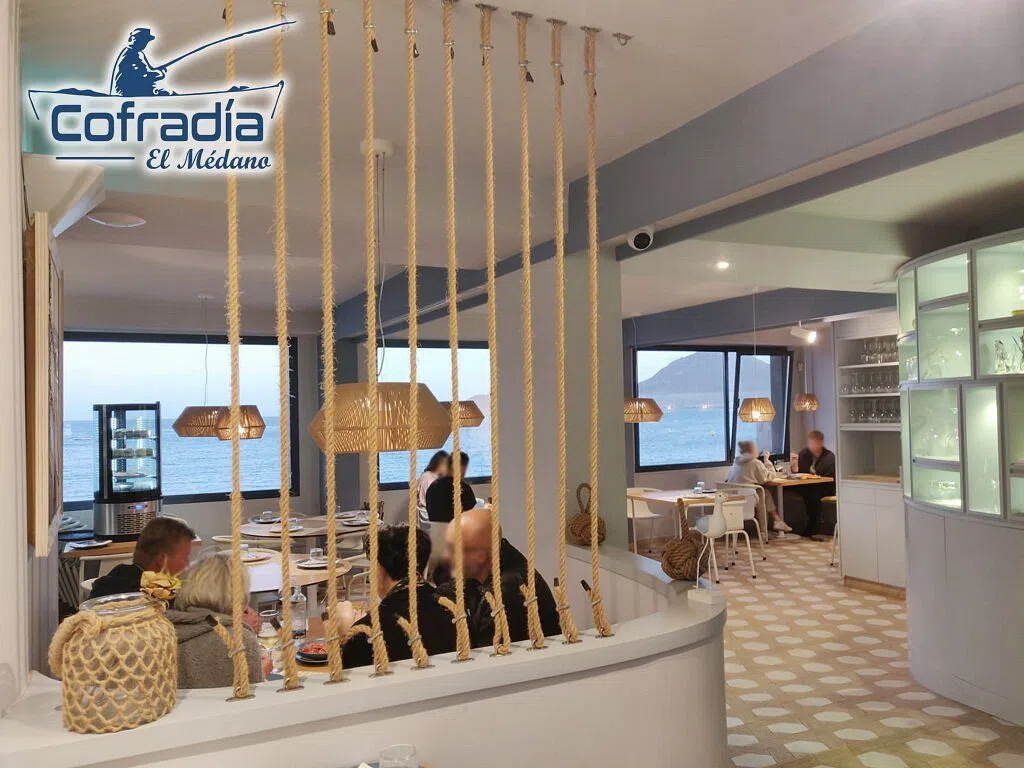
Down on the harbour, Cofradía El Médano is the one to understand before you book anywhere else. It's the fishermen's-association restaurant — fresh fish, seafood and Canarian rice dishes served in the building that the trade itself keeps — and it carries the particular authority of a place where the supply chain is roughly twenty metres long. Sit there in the late afternoon, with the boats shifting on their moorings and the wind working the water beyond the wall, and the appeal of the whole town clicks into place.
In the centre, La Boquería Taberna is the small-plates option, a compact spot trading in Mediterranean and Canarian dishes meant for sharing and ordering in waves. It suits the evenings when nobody can agree on a single thing. For the opposite instinct — one kitchen, one long memory — there's Restaurant Familiar, family-run and open since 1964, which is sixty-odd years of serving generous Canarian portions at fair prices to a town that has changed shape several times around it. A place that has survived that long in a seasonal economy has earned its reputation the slow way.
The broader budget mood of El Médano matches all of this: mid-range and practical, not luxury. Self-catering apartments, fair-priced local restaurants, very little in the way of resort mark-up.
Nightlife in El Médano
Evenings here are low-key by design. This is a wind-sports town that gets up early for the morning glass-off, and nobody is pretending otherwise — there's no strip to compare with Playa de las Américas or Costa Adeje, and if that's what you came for, you're thirty minutes down the coast from it.
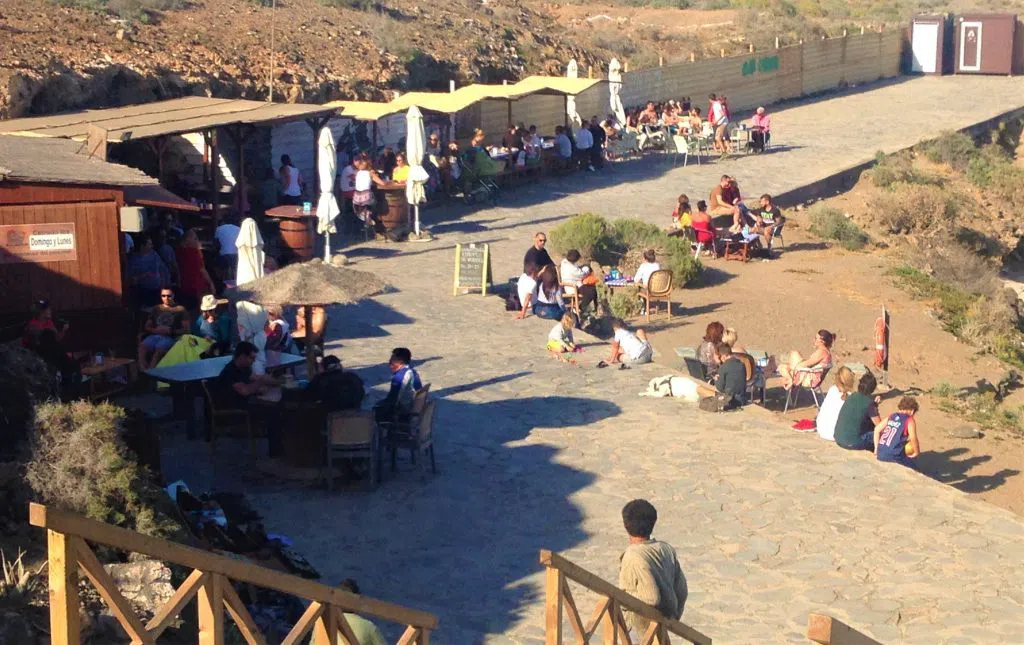
What El Médano does superbly is the golden hour. The surf-leaning bars along the seafront fill as the light goes long and the sails start coming in. Manfred's Soul Café is the town's best-regarded bar and the natural first stop: a terrace full of the surf crowd, drinks in hand, with Montaña Roja turning properly red in the last of the sun. Conversations run to conditions, kit and where the wind is going tomorrow.
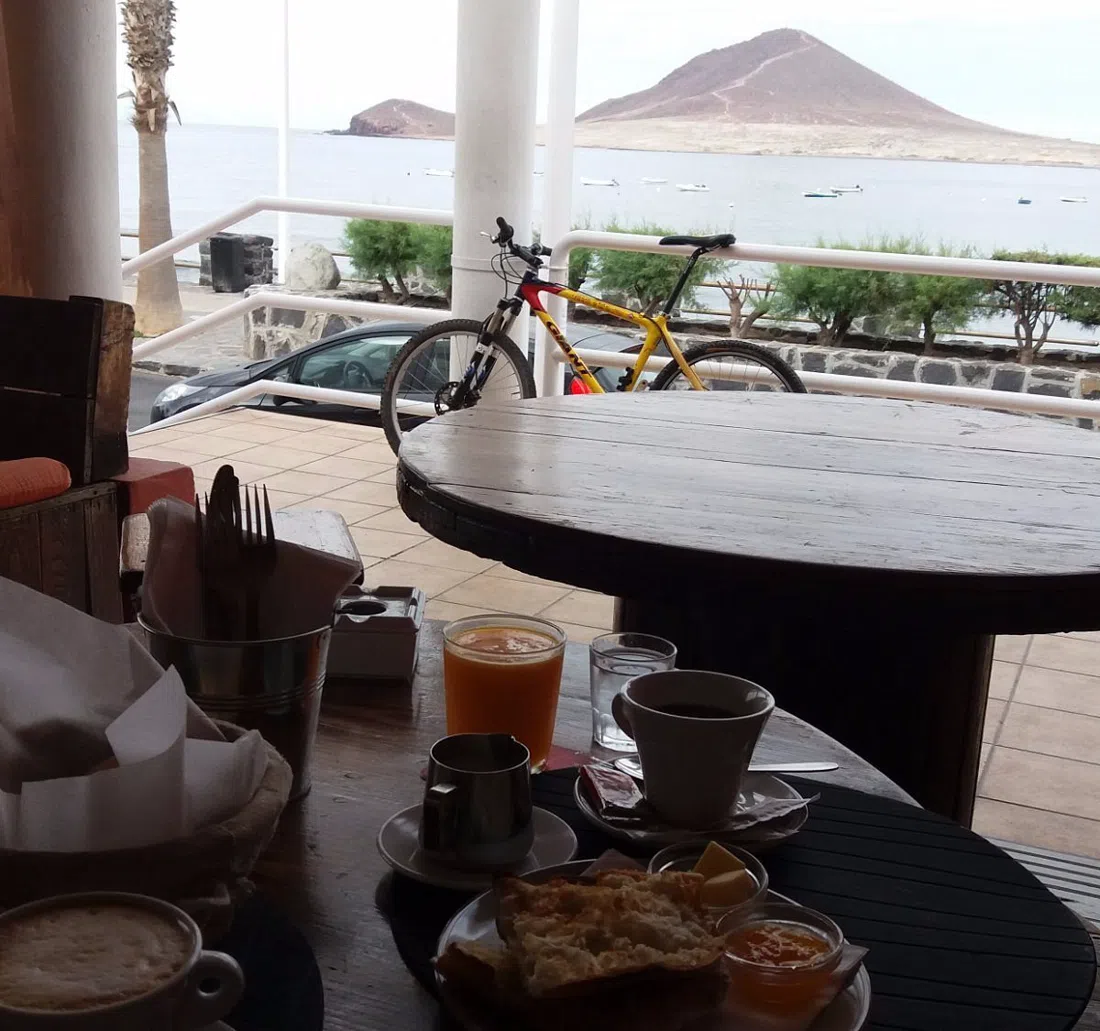
Café Flashpoint, out at the promenade end, pulls off the day-into-night trick that beach towns rarely manage — a beach-day café that shifts gear into evening drinks and live sets without changing its clothes. And for the quieter version of the same ritual, walk out to Chiringuito Pirata de La Tejita, a simple beach shack on La Tejita with none of the town's traffic and a sunset that feels like you found it yourself.
Things to do in El Médano
Learning to windsurf, kitesurf or wing-foil is the obvious anchor, and the town has the infrastructure to take you seriously. Duotone Pro Center is the largest operation on the bay and IKO-affiliated, running beginner kite courses across five two-hour sessions with a maximum of two students per instructor. That ratio is the number to note: two students, not six, which is the difference between genuinely learning to kite and spending a week watching someone else learn. They also cover windsurf, wing-foil and SUP, so the plan can change with the forecast.
On the days you want to be above the wind rather than in it, climb Montaña Roja. The protected volcanic cone and nature reserve at the end of the beach gives up a short, steep hike and panoramic views south along the coast — the whole bay laid out below, the sails reduced to flecks of colour, the airport runway off to one side. It is a brisk effort rather than a day out, which makes it the perfect thing to do before breakfast.
Beyond it lies La Tejita beach, wilder and undeveloped, sitting at the foot of the cone a short walk from the town beach. No apartment blocks, no promenade, just a long open stretch that makes El Médano's own beach look positively urban by comparison. Many visitors never get this far. They should.
Shopping in El Médano
Nobody comes here to shop, and the town has the good sense not to argue. Retail is practical and surf-focused: board and kite shops along the streets behind the beach, where the conversation is as useful as the stock and someone will tell you honestly whether today is a day for you; a scatter of swimwear and beachwear stores; and the everyday supermarkets and pharmacies that quietly make the place workable as a long stay rather than a holiday.
That last category matters more than it sounds. A town where you can buy groceries, get a prescription filled and have a board repaired within the same ten-minute walk is a town you can actually live in for a month — which is precisely what a good number of the people around you are doing.
Where to stay in El Médano
Almost everything here is apartment-style accommodation rather than big hotels, which fits the self-catering, long-stay character of the place exactly. The streets immediately behind the main beach and the blocks around Plaza El Médano are the sweet spot: a five-to-ten-minute walk from the Bay, the harbour restaurants and the evening bars, which is to say everything. Expect balconies rather than lobbies, kitchens rather than breakfast buffets, and a rental market that assumes you might stay a fortnight or a season.
If you're flying at an unsociable hour, the five-minute airport run turns a standard annoyance into a non-event — one of the strongest practical arguments for basing yourself here at either end of a longer Tenerife trip.
Getting around El Médano
Tenerife has no metro and no tram, so El Médano runs on the island's TITSA bus network and, realistically, on your own feet. The centre, the main beach and the harbour all sit within about ten minutes' walk of each other, and the walk out to La Tejita and Montaña Roja is short enough to do in flip-flops.
For the airport, the drive is about five minutes by car or taxi. By bus it takes longer and involves a change at San Isidro, on lines 408 and 111 — fine if you're unhurried, less fine with board bags and a dawn departure. Tenerife North Airport, for inter-island and mainland connections, is roughly 50 to 60 minutes north. A car is useful for exploring the island properly, but genuinely unnecessary for a week spent chasing the wind here, which is its own kind of holiday luxury.
24 October 2026