
Spain · the visa
Tenerife
Tenerife suits a remote worker who wants 1 Gbps fibre, a 20°C winter and a hot desk under €200 a month, and who can live in the north rather than the resort south. The catch is housing: furnished long lets are scarce, asking rents in the capital are up 4.5% on the year, and about a third of coastal housing stock is tied up in tourist lets.
- A month · October 2026€1,200–1,750Coworking5 spacesPieces11
The sheet
Researched 24 October 2026 · figures hold for October 2026
- One-bed flat, Santa Cruz de Tenerife or La Laguna
- €700–900 ($800–1,025)
- Idealista's index put asking rents in the capital at 14.0 €/m² in September 2026, down 1.1% on the month but up 4.5% on the year; a typical one-bed is quoted around €800. Province-wide 15.3 €/m², peak 15.6 €/m² in July 2026.
- One-bed flat, Costa Adeje or Los Cristianos
- €790–1,230 ($900–1,400)
- Mid-2026 range for the south from a 2026 nomad guide; the equivalent northern range the same source gives is €570–835 ($650–950). Sea view or pool access sits at the top of the band.
- Coworking hot desk, one month
- €135–215 ($155–245)
- Published October 2026 rates: Coworking in the Sun €180 plus 7% IGIC, Zen Den €205, Workeamos from €170, Chill Coworking quoted around €135. Three months at Coworking in the Sun is €405, about €4.50 a day.
- Coworking day pass
- €15–20 ($17–23)
- Zen Den €18 and Coworking in the Sun €18 plus IGIC, both from their own sites in October 2026; Coworking Nomad in Santa Cruz lists a flexible desk at €18 a day, meeting room €12 an hour.
- Café desk time, El Michi, Puerto de la Cruz
- €5–8 ($5.70–9)
- €5 buys five hours in the separate coworking room, €8 the same with a coffee and a snack; a month there is €170.
- Restaurant meal, one head
- €10–18 ($11–21)
- Range reported for 2026 across the island; eating out two or three times a week runs €175–350 ($200–400) a month in the south, somewhat less in the north.
- Groceries, one month
- €195–280 ($220–320)
- Mid-2026 figure for the north; the south is quoted €220–305 ($250–350).
- Prepaid SIM and data
- €5–10 ($5.70–11.40)
- Digi prepaid, prices including IVA as published in October 2026: 25 GB €5, 50 GB €7 with unlimited national calls and 100 international minutes, 100 GB €10. All 5G, unused data rolls over, no minimum term. The SIM itself is bought with €10 of credit loaded.
- Home fibre, 300–600 Mbps
- €26–44 ($30–50)
- Movistar, Vodafone, Orange and Digi all sell into the main towns; mid-2026 range.
- Bus travel card (bono-bus)
- €15 or €25 ($17 or $29)
- Saves roughly 50% on single fares and is shareable. Puerto de la Cruz to Santa Cruz is €5 full fare, €3.30 on the card; Playa de las Américas to Santa Cruz €9, or €5.95 on the card. Cards are sold at stations and newsagents, not on the bus.
A month in Tenerife
EUR (€); USD equivalents converted at roughly €1 = $1.14€1,200–1,750 ($1,370–2,000) in the north, €300–400 ($340–455) more in the south. Basis: a one-bed at €700–800, a hot desk at €135–180, groceries at €195–280, eating out two or three times a week, a €7 prepaid SIM, €26–44 home fibre, and bus fares rather than a car.
Fixed fibre is the island's strength. Residential lines at 300 Mbps and above are widely available in the main towns from Movistar, Vodafone, Orange and Digi at €26–44 ($30–50) a month, with 300–600 Mbps typical in practice as of mid-2026. Coworking spaces run well ahead of that: Coworking in the Sun publishes 1000 Mbit/s synchronous shared across a maximum of twenty desks, and The Zen Den runs 1 Gbps fibre over WiFi 6. Mobile 4G and 5G coverage is reliable in the towns and thinner in the mountains and the Anaga and Teno massifs. The SIM to buy on arrival is Digi prepaid, sold in-store as a physical SIM with €10 of credit loaded: 25 GB for €5 ($5.70) a month, 50 GB for €7 ($8) with unlimited national calls and 100 international minutes, 100 GB for €10 ($11.40). All tariffs are 5G, unused data rolls over, and there is no minimum term; the network underneath is Movistar's, which is the best of the three in the Canaries. Holders of an EU-issued SIM can roam in the Canaries at domestic rates and may not need a local line at all.
Where to work
- Coworking in the Sun · Centro Comercial La Cúpula, Local 69, Puerto de la Cruz (north)day €18 ($21), plus 7% IGIC · month €180 ($205) plus IGIC; €63 ($72) a week; €405 ($462) for three months1000 Mbit/s synchronous, shared across a maximum of 20 coworkers, so the headline speed survives a full room. Twenty hot desks, five small offices, meeting and class rooms, a soundproof room for calls and video editing, an in-house gym and an onsite café. Meeting rooms are free from 14:00 to 20:00.
- The Zen Den · C.C. Pueblo Canario, Local 310, Costa Adeje (south)day €18 ($21) · month €205 ($234); €70 ($80) a week; €140 ($160) for a ten-day flexi pass1 Gbps fibre on WiFi 6, fifteen hot desks, a free six-person meeting room, an outdoor terrace for calls, and capsule coffee, tea and fruit included. About 200 m from the sand at Playa de las Américas.
- Workeamos · Santa Cruz de Tenerifeday Not published; enquire · month From €170 ($195)The capital's established space, with a regular member events programme rather than a drop-in tourist crowd.
- Coworking Nomad · Santa Cruz de Tenerifeday €18 ($21) for a flexible desk · month Not published; the directory listing quotes day rates and meeting rooms onlyBuilt around short, flexible bookings, with a meeting room at €12 ($14) an hour — useful for a few days in the capital without a monthly commitment.
- Chill Coworking · Los Cristianos (south)day Not published on the site; directory listings quote about €15 ($17) · month The site advertises shared access from €12 ($14) and a private office at €380 ($435); directories quote around €135 ($155) for a monthly deskThe cheapest of the southern options, and the monthly rate includes an hour a day in a private office for calls, subject to availability.
Cafés that tolerate laptops
- FU Café · Puerto de la Cruz, about 20 minutes' walk from the centreHeavily supplied with power outlets and fast wifi, with shaded seating in a planted courtyard and organic coffee. Free coworking on Thursdays, 11:00 to 18:00.
- El Michi Coworking & Brunch · Central Puerto de la CruzA dedicated coworking room behind the café, so laptop work does not have to compete with brunch service. Charged by time rather than by consumption: €5 for five hours, €8 with a coffee and a snack, €170 a month.
- Ébano Café · Puerto de la CruzA quiet back terrace away from the street, sockets at the tables, and a reliable connection. Homemade cakes.
- Boutique Relieve · Puerto de la CruzBright, with plenty of large tables and staff used to laptops. Open 07:30 to 21:30 daily, which covers both an early European start and a late American one.
- TOC-TOC Café · Puerto de la CruzSmall and plant-based, with a mix of locals and remote workers rather than an all-nomad room.
- Hotel Valle Mar rooftop · Puerto de la Cruz seafrontOutdoor tables with a reliable connection and staff who understand remote work; better for reading and calls than for a full day at a desk.
Where nomads live
- Puerto de la CruzAround €700 ($800) for a one-bedThe cheapest of the four towns a remote worker would realistically pick, and the densest cluster of laptop-tolerant cafés on the island, plus Coworking in the Sun. Older resort town with an established foreign-resident population and a slower pace. Cloudier and wetter than the south — the north coast catches the trade winds.
- Santa Cruz de TenerifeAround €800 ($910); asking rents 14.0 €/m² in September 2026A working capital rather than a resort: full city infrastructure, the strongest coworking choice, a tram to La Laguna, and the ferry and bus hub. Less English spoken than in the south.
- La LagunaComparable to Santa Cruz, around €800 ($910)University town with a UNESCO-listed centre, ten minutes from the capital by tram. Cheaper eating out and a younger crowd; noticeably cooler and damper at 550 m.
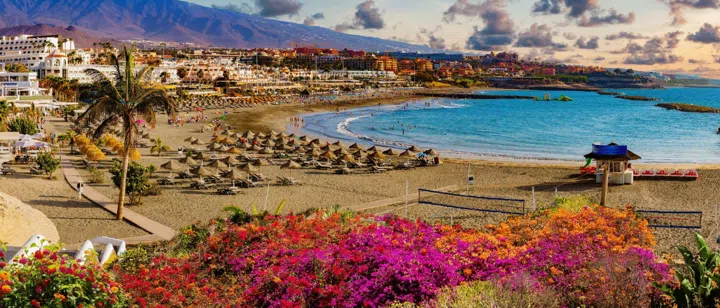
- Costa Adeje and Playa de las Américas€790–1,230 ($900–1,400)The sunniest and most expensive option, and where the organised nomad scene sits — a southern community group runs past 7,000 members. The Zen Den is a few minutes from the beach. Resort surroundings and resort prices.
- Los CristianosIn the same southern band, €790–1,230 ($900–1,400)Next to Costa Adeje but with more of a town around it, and the island's cheapest monthly desk at Chill Coworking. Ferries to La Gomera leave from the harbour.
North or south decides the budget
The island splits cleanly in two for anyone working from it. The south — Costa Adeje, Playa de las Américas, Los Cristianos — is dry, sunny, built for visitors, and runs roughly a third to a half more expensive on housing than the north. A one-bed there was quoted at €790–1,230 in mid-2026 against €570–835 for the equivalent in Puerto de la Cruz or Santa Cruz. The south is also where the organised nomad scene is: a community group covering the southern towns has passed 7,000 members, and an estimated 15,000 to 20,000 remote workers arrive on the island each year.
The north buys cheaper rent, real towns, and a shorter walk to a café that will tolerate a laptop for four hours, at the cost of more cloud. Santa Cruz and La Laguna are ten minutes apart by tram and function as one labour market; Puerto de la Cruz is forty minutes further along the coast. Crossing the island is the thing newcomers underestimate: north to south by bus is two to three hours, so a base in one half is effectively a commitment to that half. A car or a long-term rental is close to unavoidable for anyone who wants both.
Desks, and what they cost
Coworking is cheap by European standards and the published rates have been stable through 2026. A monthly hot desk runs €135 to €215 across the five main spaces; a day pass is €15 to €20. Coworking in the Sun in Puerto de la Cruz is the best value at €180 a month plus 7% IGIC, which works out near €6 a day, and it throws in a gym, a soundproof call room and free afternoon meeting rooms. The Zen Den in Costa Adeje is €205 a month for fifteen desks two hundred metres from the beach. Chill Coworking in Los Cristianos is the budget southern option.
Bandwidth is not the constraint here. Both of the spaces that publish figures run gigabit fibre, and Coworking in the Sun caps the room at twenty desks against a 1000 Mbit/s symmetric line — a more honest specification than most spaces anywhere offer. The constraint is desk supply: the main spaces hold fifteen to twenty hot desks each, which is a small absolute number against the arrival rate.
Puerto de la Cruz is unusual in having a genuine café-work circuit rather than one or two tolerant places. El Michi charges for the desk rather than the drink — €5 for five hours, or €170 a month — which removes the usual awkwardness. FU Café runs a free coworking session on Thursday afternoons. Boutique Relieve's 07:30 to 21:30 opening covers both European and American working hours.
Paperwork, tax and the housing squeeze
Non-EU arrivals need Spain's digital nomad visa, and the bar has risen. The income floor is €2,849 a month, set at 200% of Spain's 2026 minimum wage, evidenced with payslips, bank statements and contracts or client agreements. No more than 20% of income may come from Spanish sources. Private Spanish health insurance is mandatory, with no co-payment and at least €30,000 of cover — a UK GHIC or a travel policy will not qualify. The initial permit runs three years. Applying from inside Spain through the UGE takes around twenty working days; the consulate route from abroad is slower, and standards have been applied more tightly since late 2024.
The Canaries sit outside Spanish VAT and charge IGIC instead, currently 7% — which is why coworking quotes sometimes arrive ex-tax and land higher than advertised.
Housing is the real friction. Long-term vacancy in the popular areas sits at 2–4%, roughly a third of the housing stock in the coastal municipalities is given over to tourist lets, and asking rents in Santa Cruz province were up 4.5% year-on-year in September 2026 despite a 1.1% monthly dip off July's all-time high of 15.6 €/m². Good flats go in days and landlords know it.
What recent arrivals report
The consistent complaint is not cost but availability. Long lets are advertised almost entirely on Idealista and Fotocasa, both of which assume a Spanish-resident tenant: a NIE number, a local guarantor or proof of income, and two to three months' deposit up front. Furnished stock is scarce, which pushes new arrivals towards monthly short lets at a premium for the first month or two while they hunt. Several 2026 accounts describe the first weeks as the expensive part of the year.
Reports also flag the gap between advertised and effective cost in the south, where a flat with a sea view or pool access carries a 10–20% premium and where a car rental or lease at €130–175 a month is treated as a standing expense rather than an option. The north avoids most of that: the tram and the bono-bus, which cuts single fares by about half, cover Santa Cruz and La Laguna adequately.
On the upside, arrivals are consistent that the infrastructure holds up — gigabit fibre, same-day SIMs at €7 for 50 GB, and a 20°C January — and that the island is a working base rather than a short stay, with permits running three years and a community large enough that a newcomer is not the only one in the room.
Seasons
October to March is the season to come. Daytime temperatures hold around 20–24°C at sea level through the winter, the north coast gets its rain in those months but rarely for long, and the south stays dry. Two things cut against it. The first is calima — Saharan dust carried on an easterly, most frequent from January to March, which drops visibility, pushes temperatures sharply up and makes outdoor work unpleasant for two or three days at a time. The second is that winter is high season in the Canaries, so flights and short lets are at their dearest exactly when the weather is best; long lets secured in advance avoid this, drop-in apartment hunting in December and January does not. July and August are hotter, busier with Spanish mainland holidaymakers, and the south is uncomfortable for working without air conditioning. April to June and September to October are the quiet, cheap, reliable windows. Note that anti-tourism demonstrations have taken place on the island in April 2024 and May 2025.
Researched from zendentenerife.com · coworkinginthesun.com · coworkinginthesun.com · digimobil.es · idealista.com · digitalnomadsmagazine.com · myspanishdnv.com · thingsnomadsdo.com · figures hold for October 2026
Where to live
10 pieces by the writers on the ground
 Where to live · TenerifeLa Laguna, Tenerife: The Grid That Spain Took to the AmericasUNESCO town near airport with student life and architecture
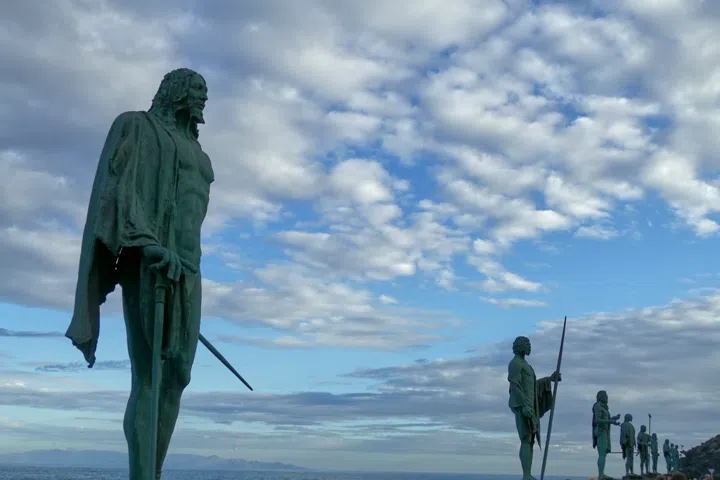 Where to live · TenerifeCandelaria, Tenerife: Nine Bronze Kings, One Tiny Virgin, and the Best Fish on the East CoastDetailed neighbourhood guide with local dining and cultural insights
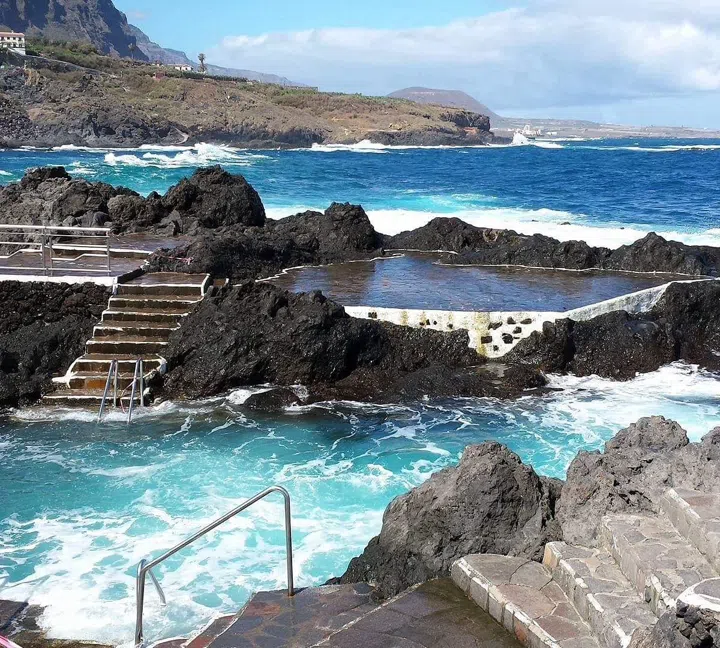 Where to live · TenerifeGarachico, Tenerife: The Town the Volcano Tried to EraseWalkable town with unique history and swimming spots
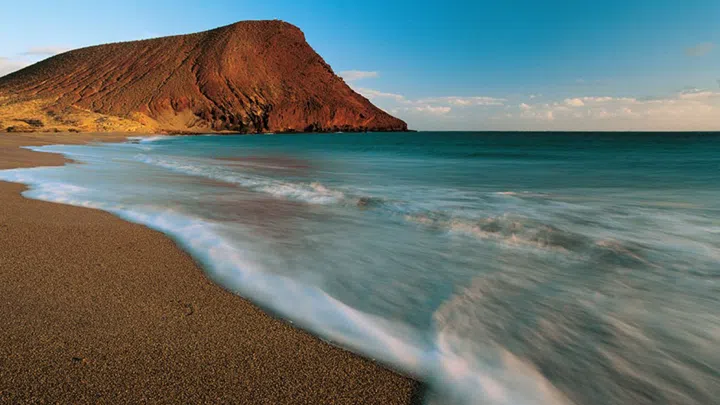 Where to live · TenerifeEl Médano, Tenerife: The Wind-Blown Town That Refuses To Be A ResortClose to airport, authentic town vibe, local food tips
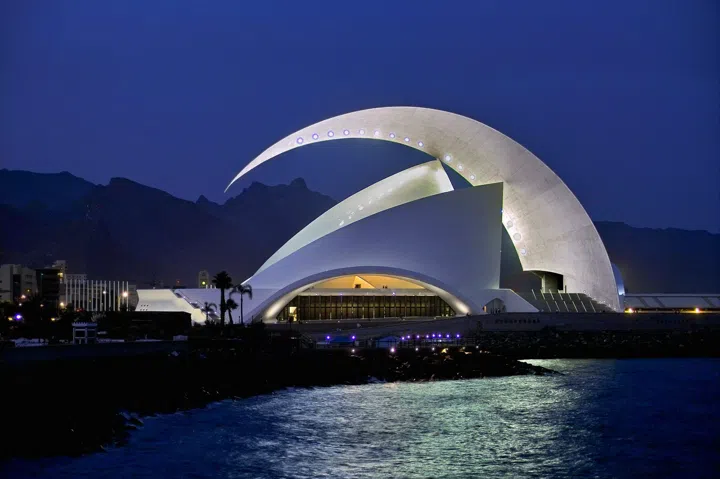 Where to live · TenerifeSanta Cruz de Tenerife: The Island's Working Capital, on Its Own 2pm ClockWorking capital with local market and cultural landmarks
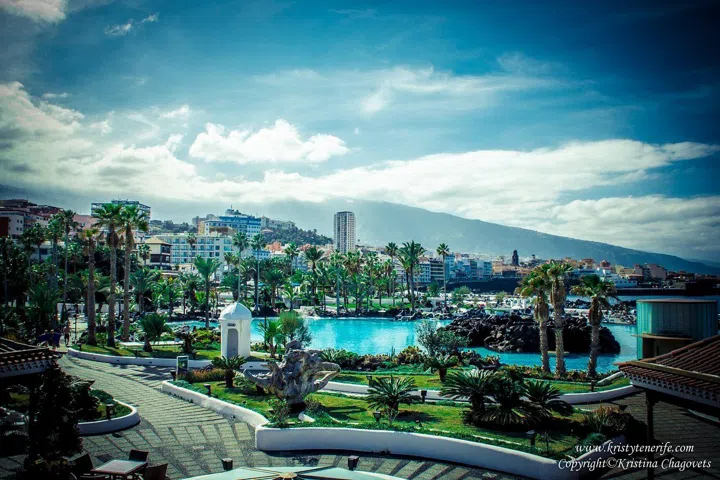 Where to live · TenerifeBlack Sand and a Michelin Star: A Long Walk Through Puerto de la Cruz, TenerifeHistoric tourist town with fishing port and top dining
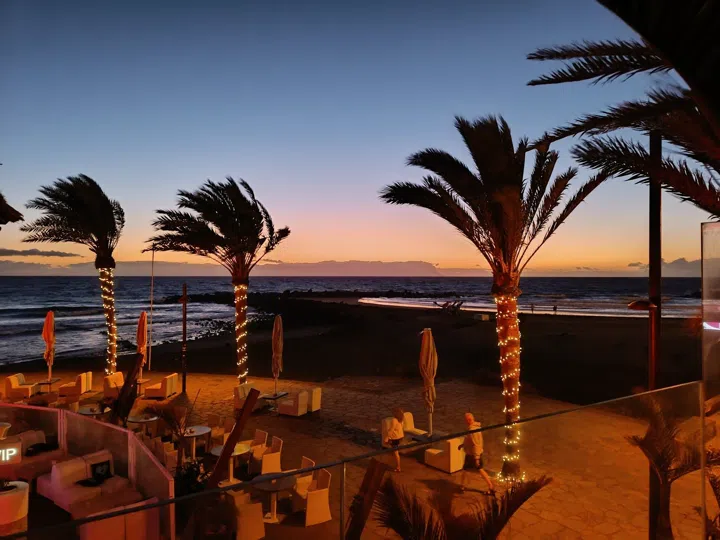 Where to live · TenerifeChristmas in Tenerife 2026: Winter Sun, Festive Traditions and Where to StayIncludes where to stay and local conditions for a longer stay
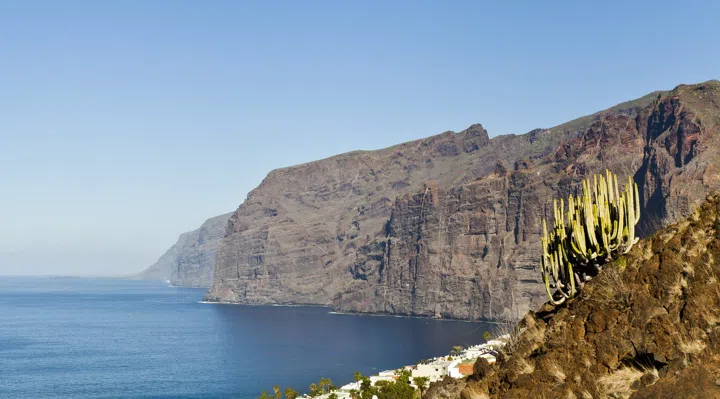 Where to live · TenerifeUnder the Wall of Hell: Inside Los Gigantes, TenerifeQuiet resort with marina and local tapas bars
 Where to live · TenerifeHarbour Town, Neon Strip: Inside Los Cristianos & Playa de las Américas, TenerifeMixed fishing port and resort with transport and nightlife
 Where to live · TenerifeCosta Adeje, Tenerife: Two Michelin Stars Above the SunbedsOverview of resort area with dining and local highlights
The weekend
1 piece by the writers on the ground
