Tenerife · Where to live · 8 min
Under the Wall of Hell: Inside Los Gigantes, Tenerife
Six hundred metres of basalt, a marina full of whale boats and a harbour ring of tapas bars — how Tenerife's quietest west-coast resort built its whole character around a cliff.
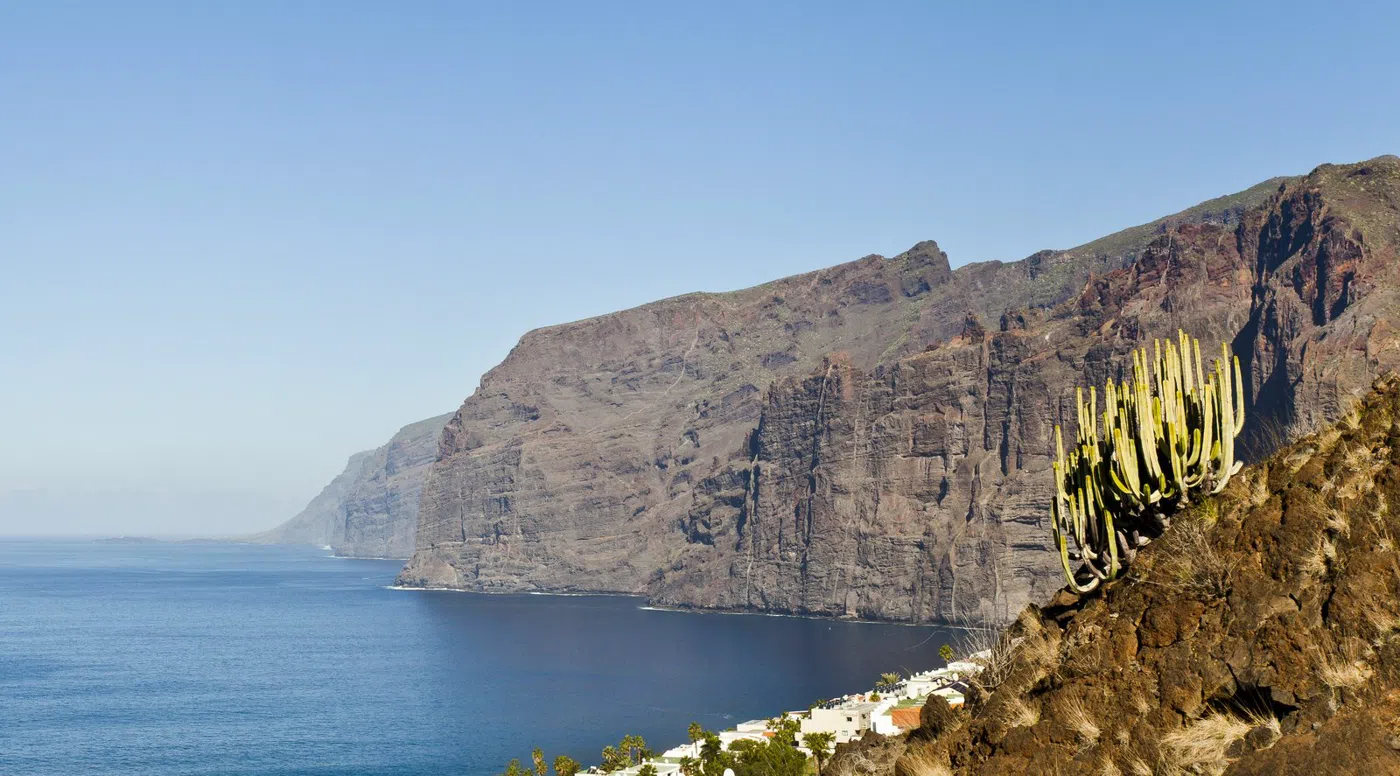
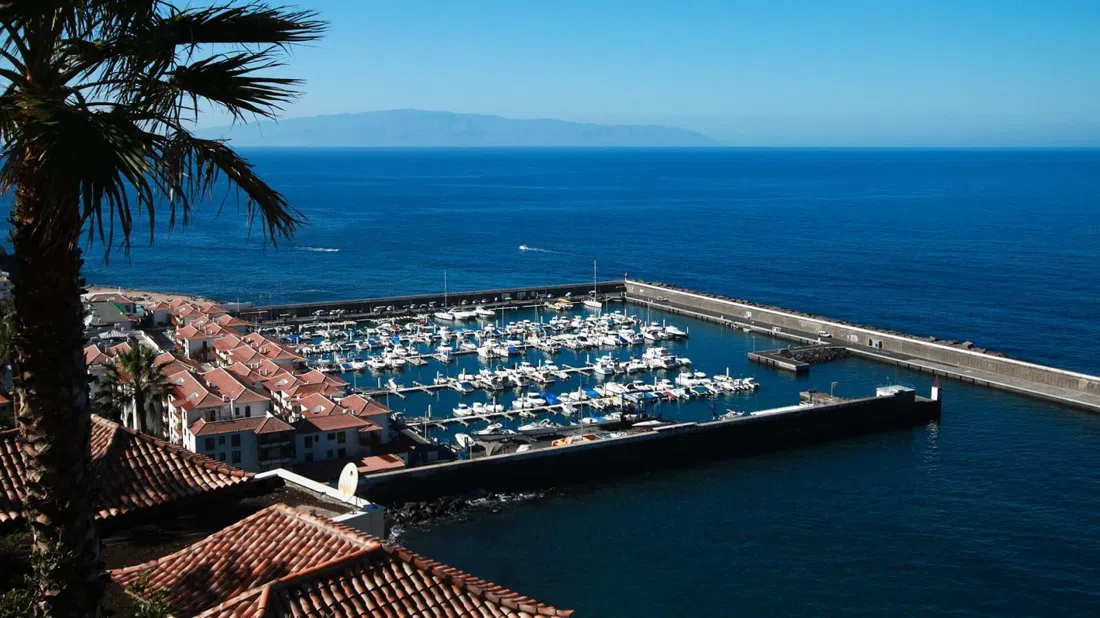
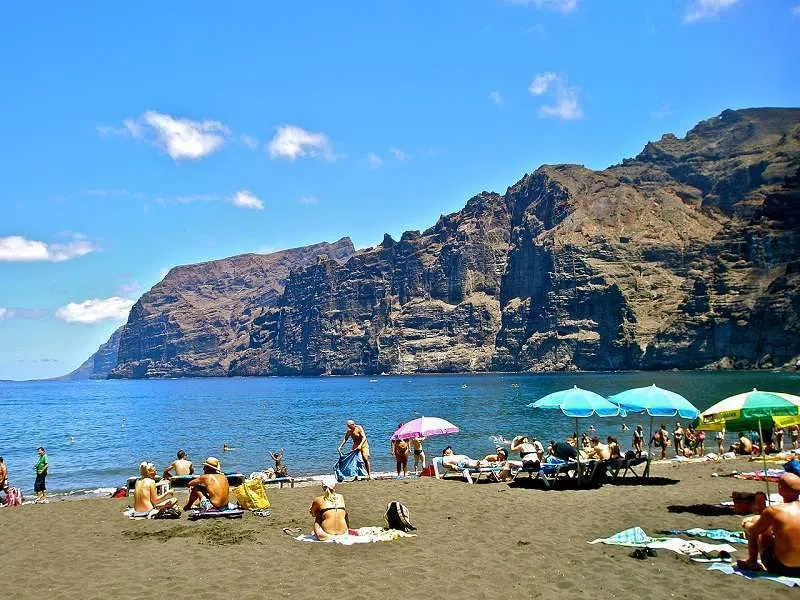
Six hundred metres of basalt stands at the end of the road here, and the rock doesn't stop at the waterline — it keeps falling for another thirty metres or so beneath the surface. The Guanches, Tenerife's pre-Spanish inhabitants, are said to have called it the wall of hell. Today that same wall shadows a small marina full of whale-watching boats, a black-sand beach wedged in underneath the rock, and a harbour ring of tapas bars whose tables have all, quite deliberately, been angled the same way.
Los Gigantes is named for the thing you can't ignore, and that naming tells you most of what you need to know. There is no strip. The town grew up around a marina rather than a parade of bars, and the cliffs do the heavy lifting visually: they catch the light red-gold toward sunset and turn the entire seafront into one long terrace with a view. Which is why, almost without exception, the social life here happens outdoors, glass in hand.
Cliffs, whales, and the last quiet corner of the resort coast
The Acantilados de los Gigantes are the reason this place exists on a map at all — a run of volcanic sea cliffs reaching roughly 600 metres above the water and dropping on down to around 30 metres below it, the whole formation sitting inside Teno Country Park. Numbers like that don't land until you're underneath them. From the harbour wall the cliff reads as a single uninterrupted face, scored vertically, utterly without softness, and the boats moored below it look like a scale model somebody left out.
What makes the geology more than scenery is what happens offshore. The channel between Tenerife and La Gomera is deep — deep enough to hold resident pilot whales and bottlenose dolphins year-round, with humpbacks passing through from December to April. That single fact has shaped the town's entire economy. The marina is one of the more reliable whale-watching launch points on the island, and the first sound you'll hear most mornings is an engine idling, not a nightclub shutting.
So be honest with yourself about the fit. This is a place for couples and older travellers who want sea views and quiet evenings; for whale and dolphin spotters; for hikers who want Masca Gorge and the Teno cliffs within reach without actually sleeping in the mountains; for anyone with a hire car and an appetite for the wilder west. It is emphatically not a place for clubbers — there's no late-night scene to chase — nor for sun-worshippers expecting a long golden beach, nor for anyone who needs frequent direct public transport to the airports.
Harbour tapas, cliff-view tasting menus, and a very British tea room
Eating out divides neatly in two. There's the marina, where most tables face the water, and there are the pedestrian lanes a short walk inland through Puerto de Santiago, which is where the prices soften and the crowd thins out.
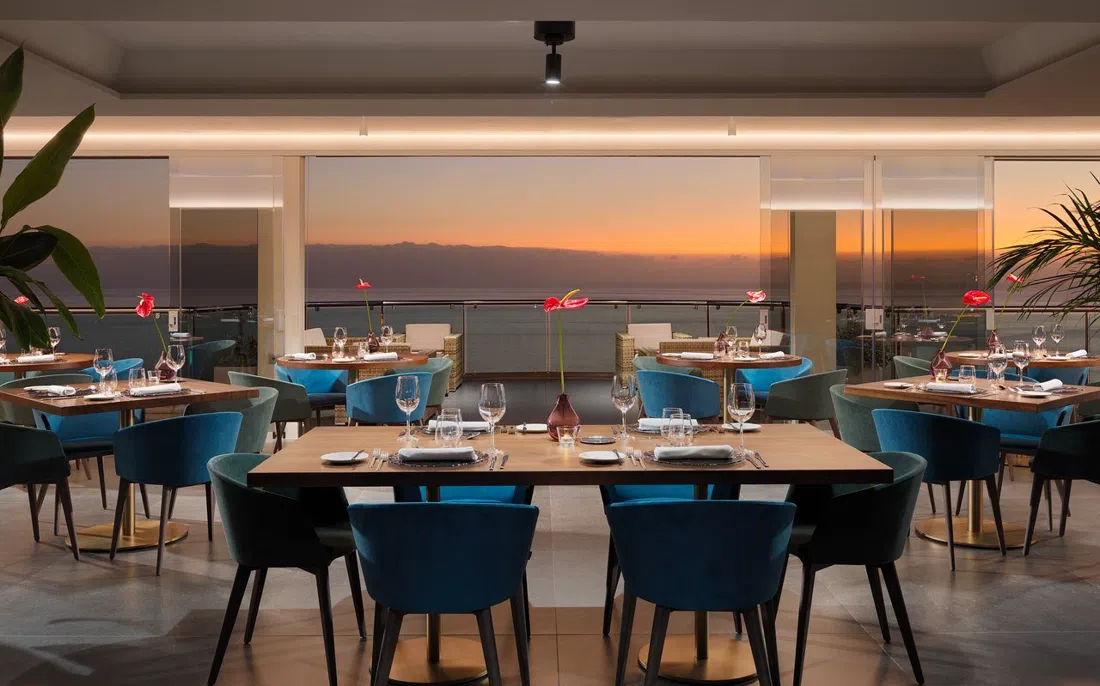
For the occasion dinner — the anniversary, the last night, the one you'll talk about — it's Restaurant Aqua, built into the Royal Sun Resort right on the cliff edge. The kitchen runs a chef-led tasting menu constructed around Canarian ingredients, and the terrace does something no amount of plating can: the cliffs simply drop away below you while you eat.
The area's most-praised table, though, is smaller and less showy. Charlie's Bistro works a short, seasonal, French-touched menu, and locals book it out weeks in advance — which is the single most useful piece of planning advice in this guide. Reserve before you fly, not when you land.
For the other kind of evening, the unplanned one, walk the harbour. Tas-K is the friendly, affordable tapas bar near the marina that does exactly what a harbourside tapas bar should: plates arriving faster than you ordered them, nobody rushing you off the table.
A few doors along, KV Bar Gourmet leans French with its seafood and charcuterie, which makes it the better choice if you'd rather graze slowly over a bottle than commit to three courses. Pejeverde, also on the harbourfront, is where to go for traditional Canarian cooking — the straightforward island repertoire rather than anything reinvented. And up on the Puerto de Santiago pedestrian lane, Rosso Pomod'Oro turns out honest, well-liked Italian pizza, which after four days of fish is a more welcome sentence than it looks.
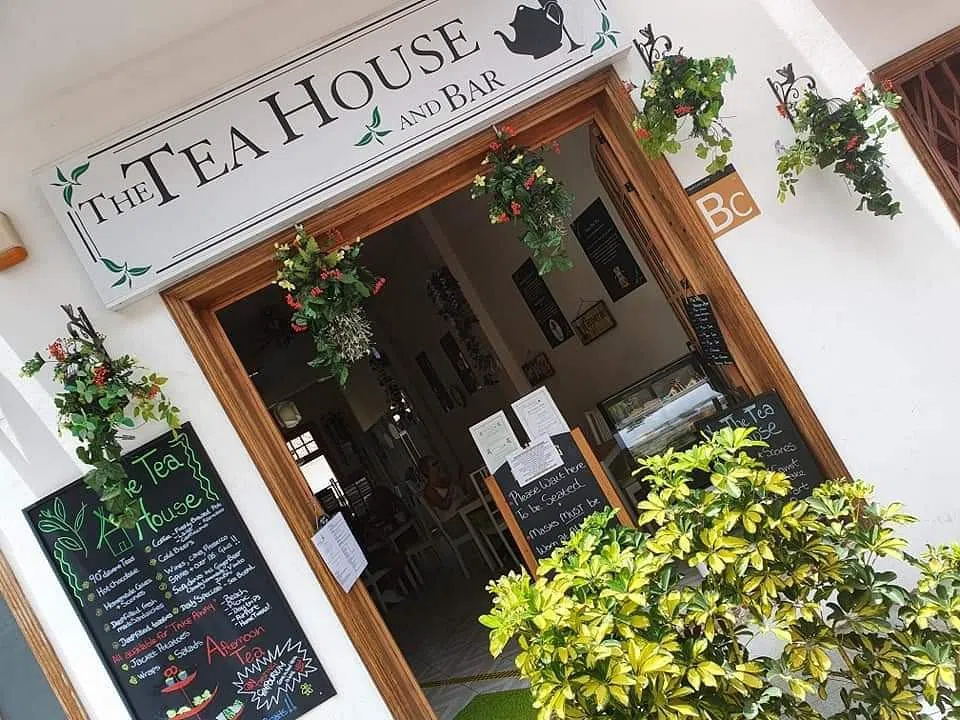
Then there's the outlier, and I mean that affectionately. The Tea House & Bar serves homemade English afternoon tea, scones and cake included, a straight holdover from this coast's long British holiday history. It would be easy to sneer. Don't — it's good, it's genuine, and sitting over a pot of tea at four in the afternoon fits the rhythm of Los Gigantes far better than it has any right to.
Sunset drinks, not late nights
Nobody here is pretending otherwise. Even the area's own tourism write-ups are blunt about it: nightlife in Los Gigantes means dinner and a few relaxed drinks, not dancing until dawn. If that's a disappointment, the south-coast resorts are a drive away and they'll happily take your money.
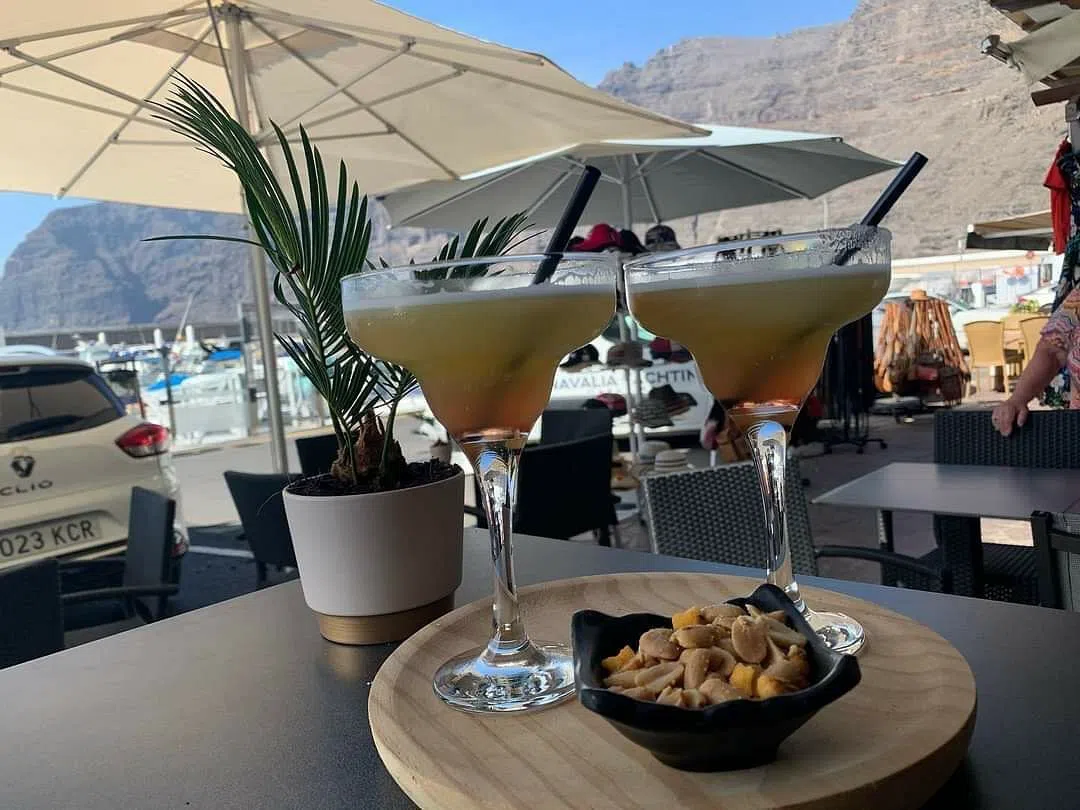
What this town does superbly is the hour before dark. Puravida Bar, on the harbour at Lugar Poblado, is the place I'd send anyone on their first night — cocktails, tapas, a well-chosen list of Belgian beers, and a clean, unobstructed view of the cliffs as they go from grey to copper to a deep bruised red.
Afterwards, The Wine Bar & Terrace is the closest thing the area offers to a proper night out: an evening restaurant-bar with occasional live music, the sort of room where one more glass turns into three and you still make it home before midnight. That's the ceiling here. Accept it and the place becomes restful rather than dull.
Boats, cliffs, and the view from both sides
The marina is the centre of gravity for every daytime plan. Whale and dolphin watching trips leave daily, and sightings are more dependable here than at most launch points on Tenerife because of that deep channel toward La Gomera. The long-standing name on the quay is Freebird Catamaran, which has been running whale-watching and Masca Bay sailing trips out of Los Gigantes Marina for years and stays consistently well rated into 2026.
It's worth understanding what you're paying for. From the water, the Acantilados de los Gigantes resolve into something you cannot see from land at all — the full height of the face, the way it folds, the seabirds working the updraughts. Masca Bay, reachable on the same kind of trip, is the gateway to the gorge that brings hikers to this coast in the first place.
Back on shore, Playa de los Guíos is the local beach: black volcanic sand, directly beneath the cliffs, and small. Here's the thing nobody tells you in the brochure — those 600 metres of rock keep the sand in shade until around midday, which is why locals turn up in the afternoon and visitors who arrive at nine wonder why they're cold.
For the view from above, walk up to Mirador Archipenque, which looks straight onto the cliff face and is at its best in the last hour of light. There's a small café attached, so you can sit with the thing rather than photograph it and leave.
A supermarket, a few souvenir shops, and not much else
This isn't a shopping destination and it has the good sense not to claim to be. The practical anchor is the Lidl in Puerto de Santiago, open daily including Sundays, and it's where most self-catering visitors in the apartments and aparthotels do their stocking up — water, local cheese, wine, and whatever you plan to grill on the terrace. Around the marina and through the Puerto de Santiago lanes you'll find the usual scatter of souvenir shops and holiday essentials, and genuinely little beyond that. Treat it as a feature. Your holiday budget is better spent on a boat than a shopping afternoon.
Where to stay in Los Gigantes
The cliff-edge hotels directly above the marina are the reason most people choose this town over anywhere else on the west coast. Royal Sun Resort sits closest to the rock face, with direct cliff and La Gomera views, and it's the area's best-known upscale option — Restaurant Aqua is built into it, which saves you a walk on the night you don't want one.
Step back from the water and you're in Puerto de Santiago, which holds the bulk of the area's apartments and aparthotels. It's the pragmatic choice: a few minutes further on foot, noticeably easier on the wallet, and walkable to both the Lidl and the pedestrian-lane restaurants. Overall, expect mid-range resort pricing — the cliff-edge rooms push the average up, but harbour tapas and a supermarket shop keep daily costs sensible if you self-cater.
You'll want a car; the buses exist but they're slow
Locally, forget wheels entirely. Los Gigantes is small enough to walk end to end in about fifteen minutes, and the marina, the beach and the Puerto de Santiago lanes all sit within easy reach of one another on foot. That's genuinely the best way to move around here.
Getting to and from it is the harder part, and this is where some visitors come unstuck. There is no direct public bus from either airport. Tenerife South is roughly 40 to 50 minutes by car, Tenerife North a little over an hour; by bus, with a change at Costa Adeje, both stretch closer to two or three hours. Hire a car or pre-book a transfer, and if you intend to explore the Teno massif or reach Masca under your own steam, make it the car.
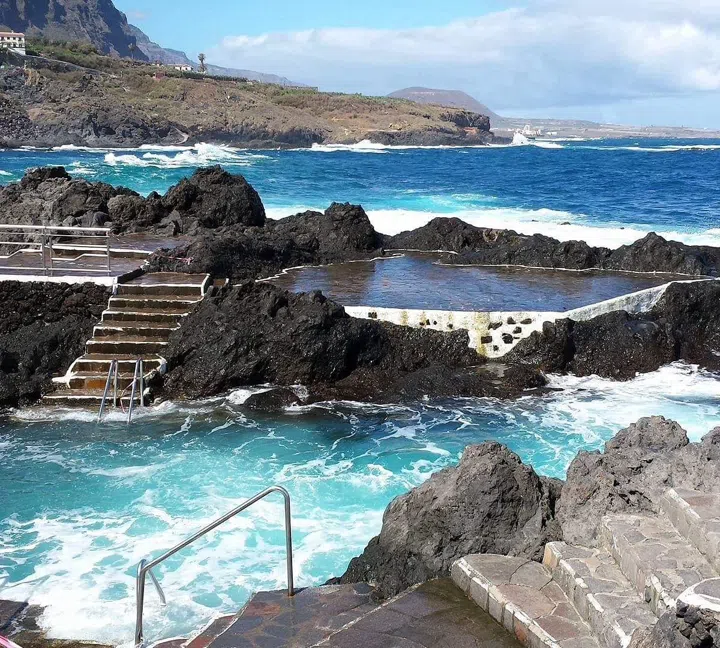
One last word, and it isn't about crime — the area is safe and low-key. The real risks here are environmental. The natural rock pools along the shore turn dangerous at high tide and in rough seas, and the cliff and coastal paths demand proper footwear and proper attention. Respect the rock that gave the place its name, and Los Gigantes will give you the best sunsets on this side of the island.
24 October 2026