Tenerife · Where to live · 8 min
Black Sand and a Michelin Star: A Long Walk Through Puerto de la Cruz, Tenerife
Tenerife's first tourist town is still a working fishing port with a 17th-century fort at one end of its seafront, a César Manrique lido at the other, and some of the island's best cooking in between.
At the western end of the seafront, a squat pentagonal fort built in the 17th century still aims its stonework at the Atlantic. At the eastern end, César Manrique's lido pours volcanic rock into the sea in long deliberate curves. Between those two bookends is a working fishing town that happens to have been Tenerife's first tourist resort — and that now holds a Michelin star two streets back from the water. There is no south-coast sand here; the beaches are black volcanic grit, and the swell arrives with Atlantic intent. What there is instead: banana-money architecture, church bells on the hour, a harbour that still works, and the dusty pivot point of the whole town, Plaza del Charco.
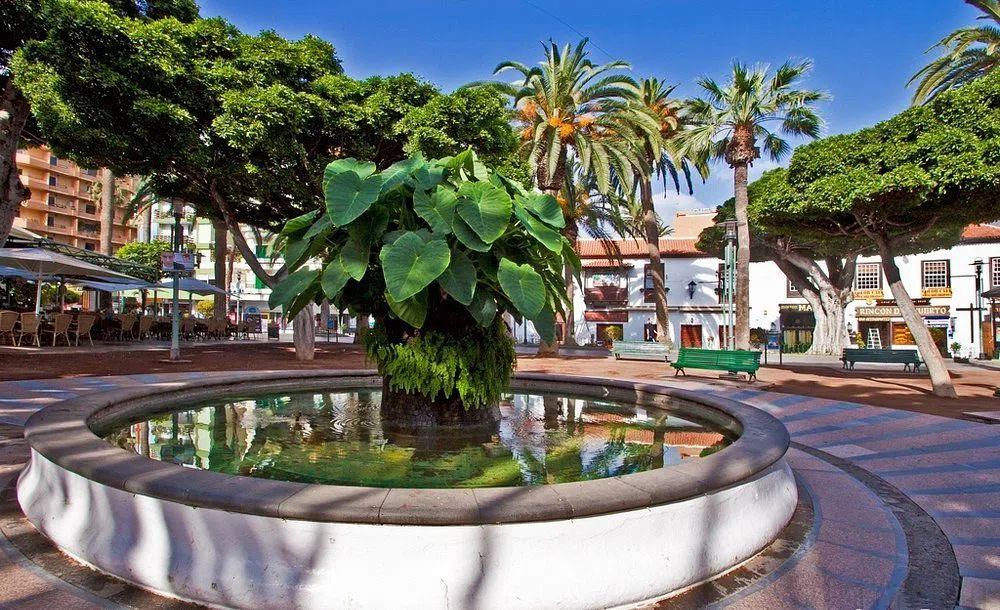
What Puerto de la Cruz is known for
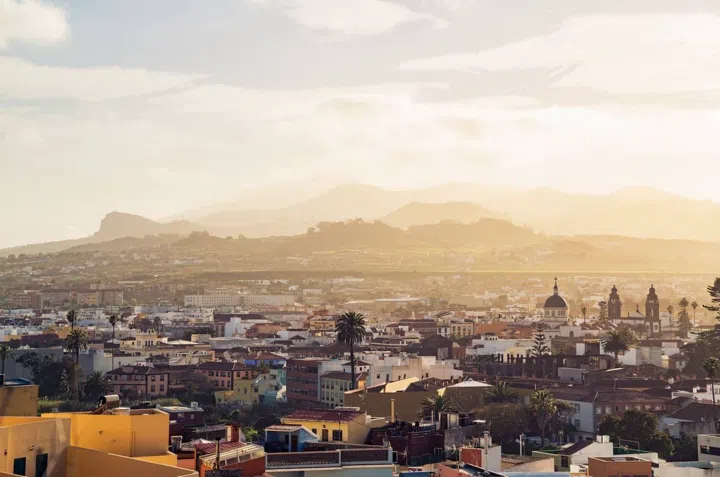
The short version of the town's biography is that it got there first. Long before the south coast existed as a destination — before the charter flights, before the purpose-built strips — Puerto de la Cruz was exporting bananas and taking in visitors, and 19th-century banana wealth paid for the squat colonial houses that still line the old town's lanes. That history is the reason the place reads as a town rather than a resort. The fishing boats are not a decorative gesture. The plaza is not a plaza-themed courtyard between two hotels.
Its two landmarks sit at opposite ends of the same waterfront and tell you everything about the town's split personality. The pentagonal Castillo de San Felipe, 17th century, guards the western end — a serious piece of defensive masonry from an era when the Atlantic brought trouble as often as trade.
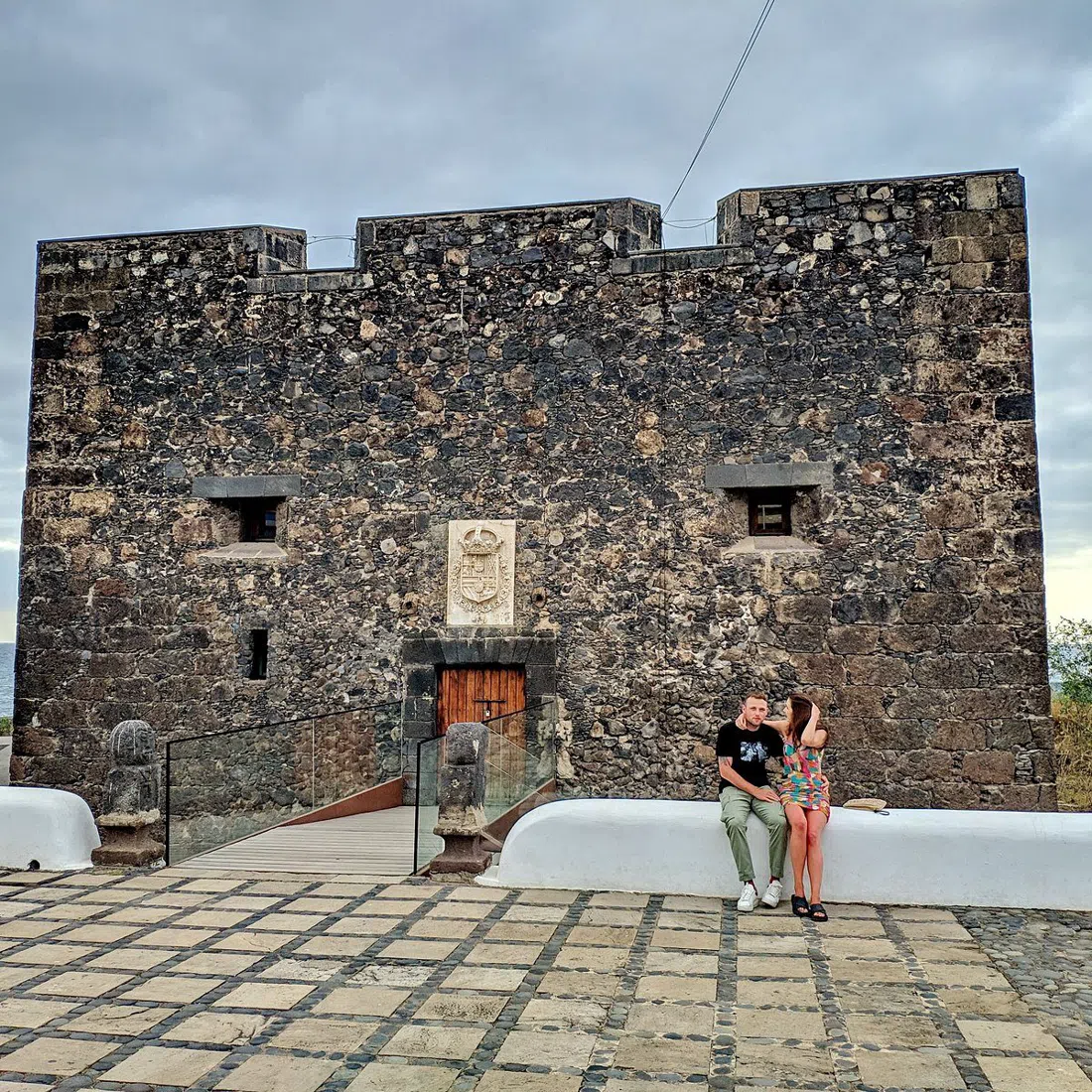
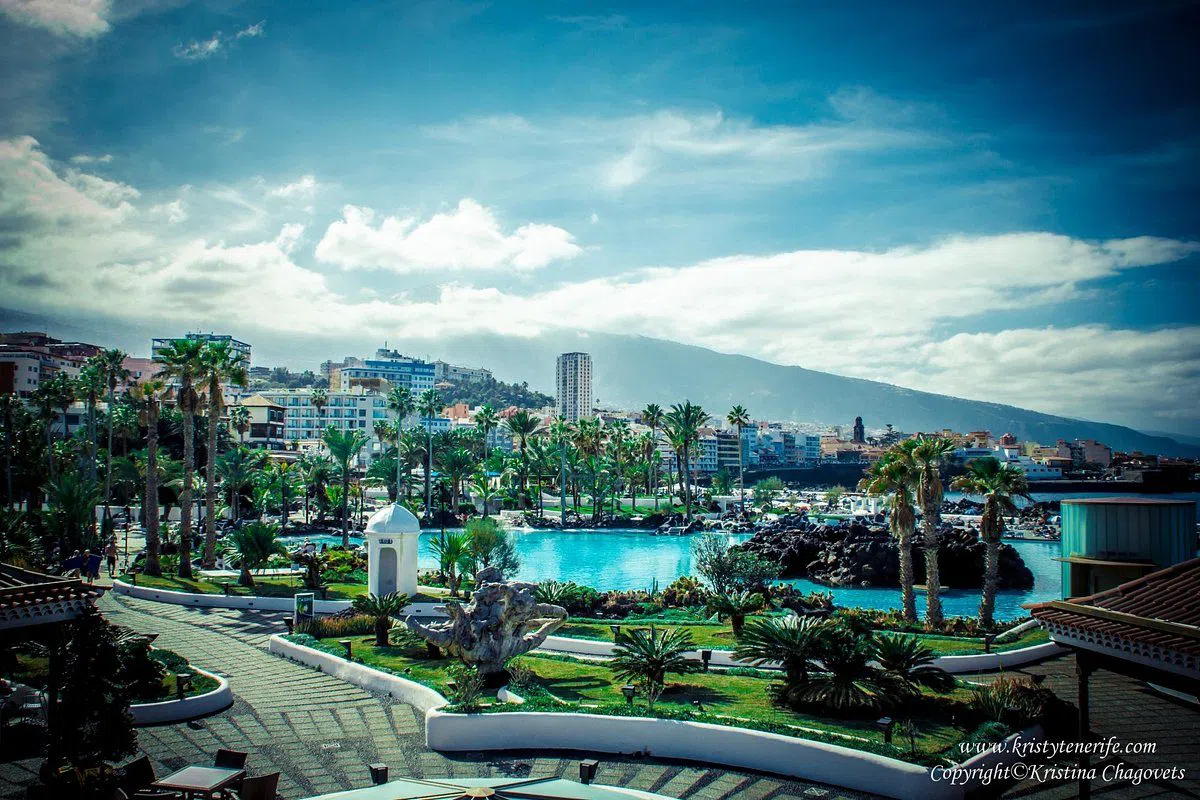
At the other end is Lago Martiánez, Manrique's 1970s answer to the fact that the local sand is black and the sea is rough. Behind the seafront, the old fishing quarter of La Ranilla has quietly become where the serious kitchens are.
The climate is part of the pitch. The north of Tenerife is cooler and greener than the south, and that suits a particular traveller: anyone who would rather have a market, a plaza and a walkable base than a sun-lounger grid. It suits long-stay visitors and returners, who come back to the same three-star and the same bar. It does not suit beach-first travellers hunting wide golden sand and flat, calm swimming water, and it does not suit anyone expecting late-night superclubs — the nightlife here is bars and plazas, not clubbing.
Where to eat and drink
The food splits cleanly in two: La Ranilla's clutch of small, serious kitchens, and the plaza-side tapas bars that have been feeding this town for decades. Both are worth your evenings, and you can do them in either order.
Start at the top. El Taller Seve Díaz sits on Calle San Felipe, a few steps off Plaza del Charco, and it picked up Puerto de la Cruz's first Michelin star in the 2026 guide. The format is a tasting menu built on Canary Island produce and Canary Island wine — which, in a town that still has a working harbour and a market a short walk away, means the sourcing argument answers itself. Reckon on €60–90 a head. In a place where a sit-down dinner otherwise runs €20–40, that is a genuine splurge, and it is the one most people here only make once per trip. Make it count: book it.
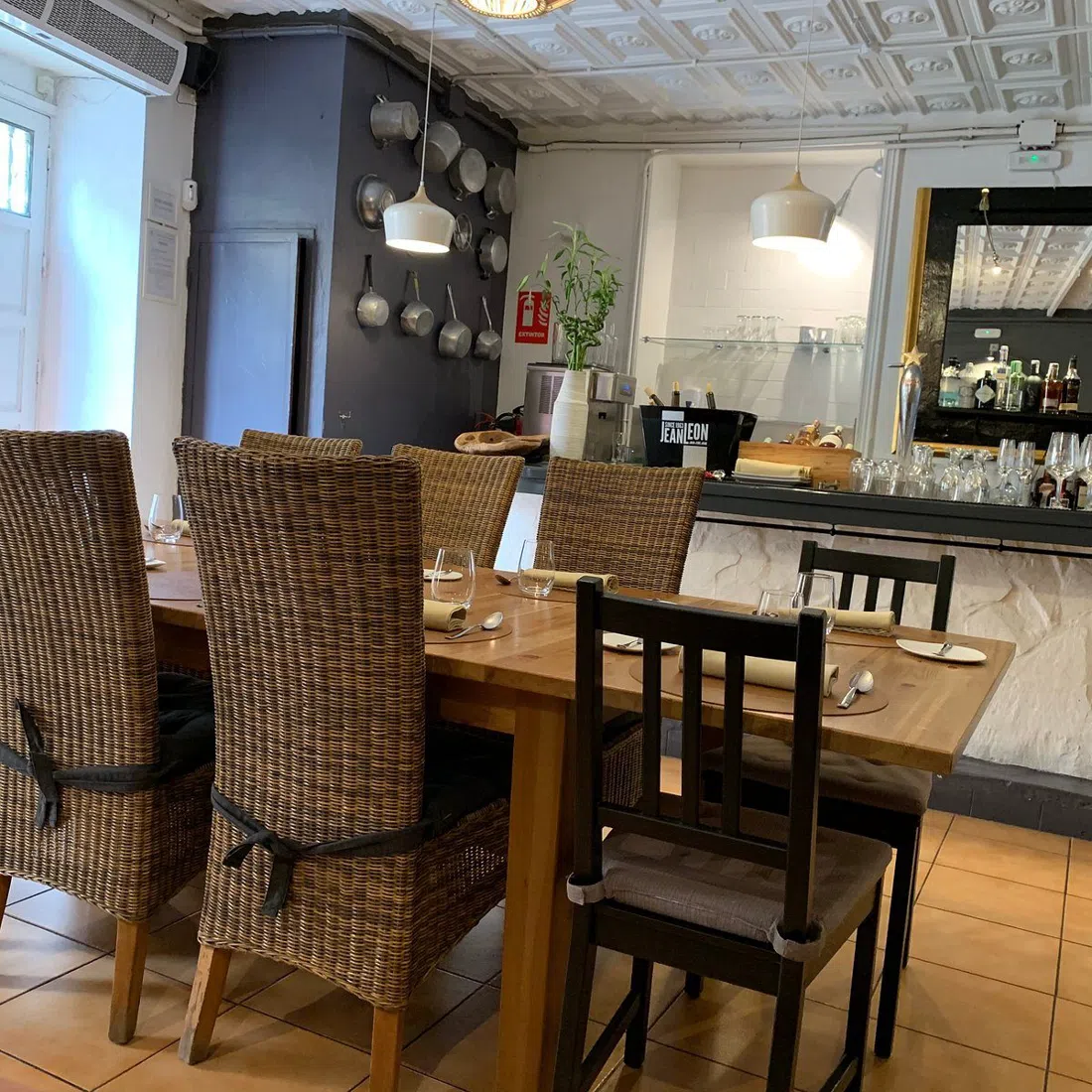
From there the scale drops and the pleasure doesn't. Tasca El Olivo, a long-runner in the old town, cooks every single dish in extra virgin olive oil — a constraint that sounds like marketing until you taste what it does to Canarian tapas across a whole table. It is the kind of room where ordering six small plates and a bottle feels like the obvious move, and the obvious move is correct.
In La Ranilla, Restaurant Tasca Ihüey does the refined end of Canarian cooking without the tasting-menu ceremony. Its duck breast with carrot-and-orange purée is the dish people come back for, and it is a fair test of the kitchen: sweet, sharp, dense, and easy to get wrong.
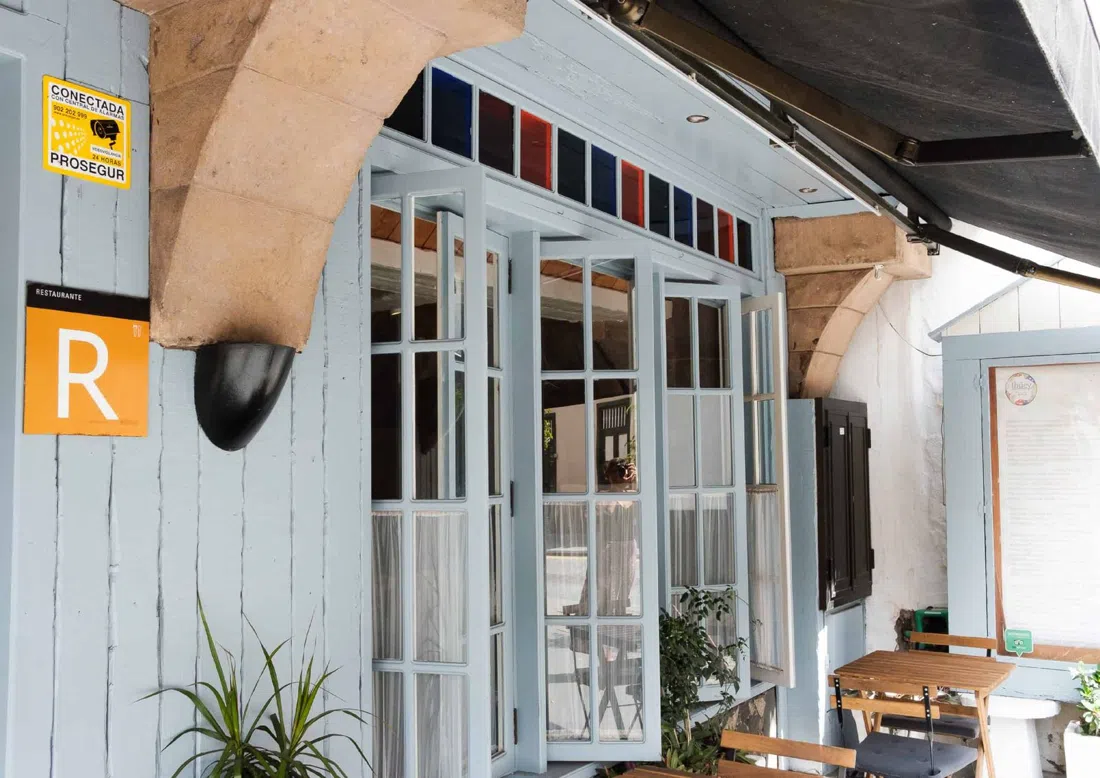
For the other kind of night — the unplanned one, the one that starts at nine — walk to Calle Agustín de Betancourt and Restaurant Olea Pintxos Bar, a casual homemade-tapas and fried-fish bar that is cheap and resolutely local. Tapas and market food start at a few euros, which is a useful thing to know when you arrive hungry with no reservation and no intention of making one. The broader budget picture in Puerto de la Cruz is budget-to-midrange almost everywhere, with the Michelin bill as the single outlier.
Nightlife
Nightlife here runs on plazas and terraces, and Plaza del Charco is the engine. Bar Dinámico, right on the square, is the social centre of the old town — live music running into the evening, the terrace spilling into the plaza, the crowd a mix of locals and visitors who have clearly been doing this for years.
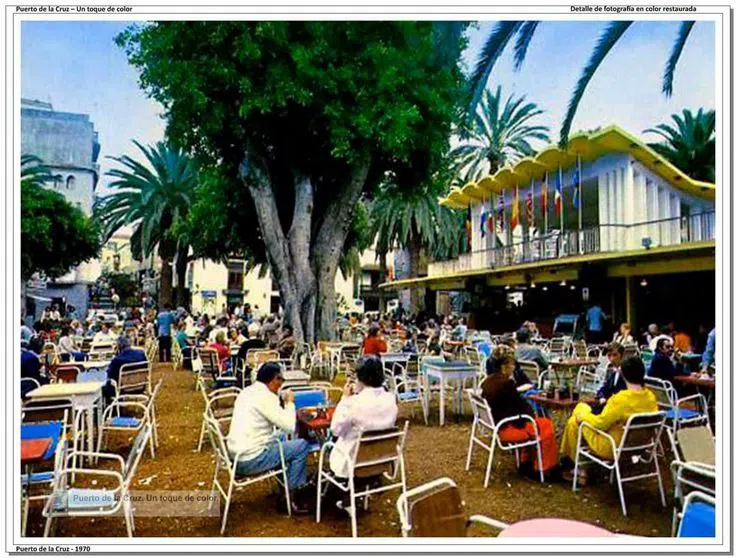
Compostelana, also on the square, plays the same game, so the practical approach is to pick whichever terrace has the band you want and let the benches around you fill up from early evening onwards. This is a town where the plaza does the work a club would do elsewhere.
If you want something with more volume, duck into the lanes behind the plaza for Blanco Bar and its live Spanish rock and blues — the kind of room where the guitar is louder than the conversation and nobody minds. Down by the water, Molly Malone's is the harbourside Irish pub, reliably busy with the long-stay British crowd, and exactly as advertised.
A word on walking home: the area around Plaza del Charco and the main old-town streets is generally safe and well lit even late, but use normal city caution on the quieter side streets after midnight, and take a taxi if you have strayed further out.
Things to do
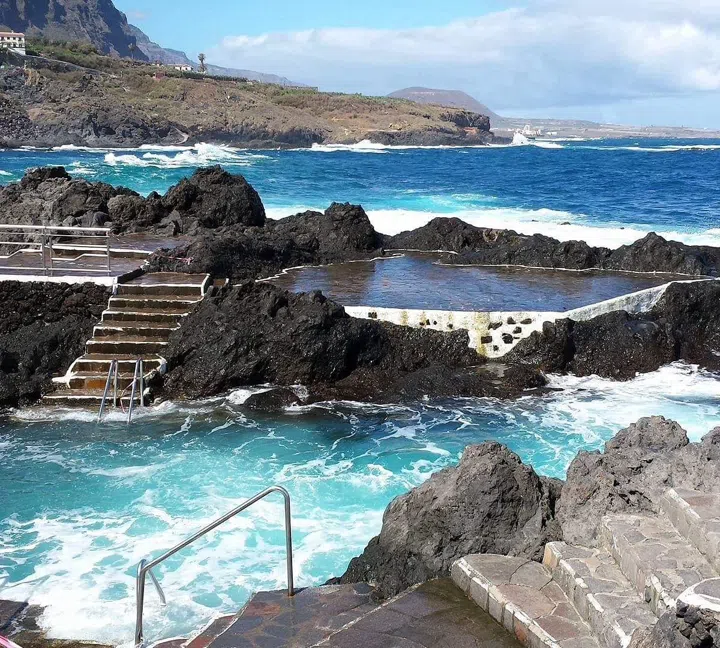
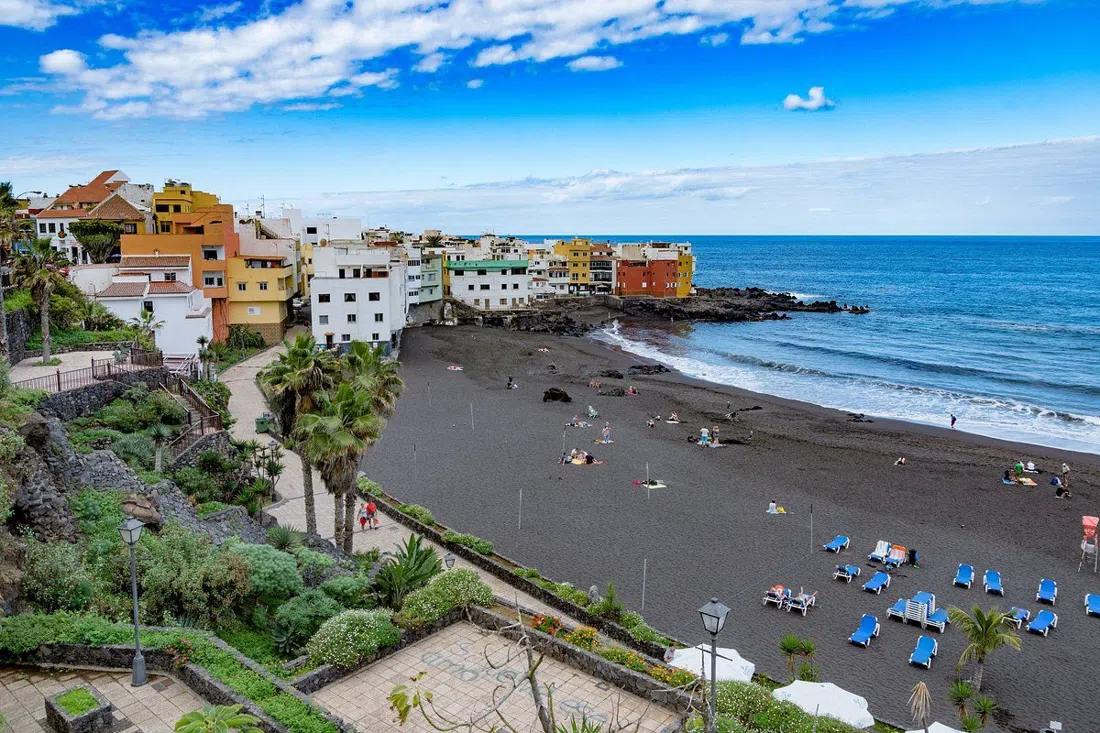
Lago Martiánez is the thing nobody skips, and the reason is structural. Puerto de la Cruz's own beaches are black volcanic sand rather than the soft stuff, so in the 1970s César Manrique built the alternative directly onto the seafront: a complex of volcanic-stone saltwater pools, islets and sunbathing terraces, open daily. It is a design object as much as a swimming place — white render, black lava, blue water — and it is where most visitors who want calm swimming water actually end up.
If you want the sea itself, Playa Jardín is the best of the local beaches: black sand again, but landscaped by Manrique with palm gardens that shield the sand from the traffic and give the whole stretch the feel of a park that happens to end in surf.
West of there, in the Punta Brava district, Loro Parque is one of Europe's largest animal parks and a short walk — or a free train ride — from the centre. It is the single biggest day-trip draw in town, and it is close enough that you can be back in the old town for lunch.
The other essential is uphill and much quieter. The Jardín Botánico on Calle Retama dates to 1788, founded as a royal acclimatisation garden — a staging post where plants from the tropics were taught to survive European weather. Getting there is a steep walk from the old town, and worth doing early, before the day heats up and the gradient stops being charming.
Shopping
The real shopping story is the Mercado Municipal on Av. Blas Pérez González — a working indoor market, open daily, stacked with fresh produce, local cheeses, meat and fish. It is where the town does its actual food shopping, which makes it the single best hour you can spend if you want to understand what the restaurants are working with.
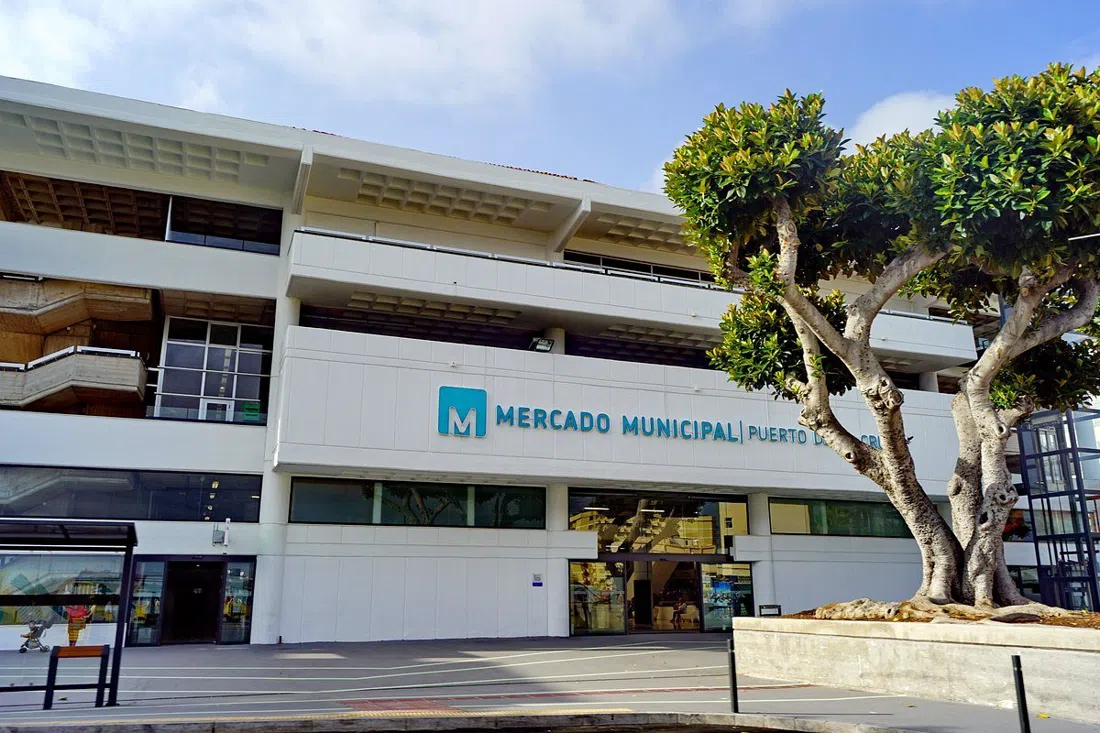
Upstairs, a rooftop flea and handicraft market runs on Wednesdays, Saturdays and Sundays from roughly 10am to 2pm, with Saturday the busiest of the three sessions. Go on Saturday for the crowd and the browsing; go midweek if you would rather have the stalls to yourself.
Where to stay in Puerto de la Cruz
The old town, around Plaza del Charco and La Ranilla, is the base to pick if you want to walk to dinner, to the plaza nightlife and to the harbour without ever thinking about transport. Expect older three- and four-star hotels in converted historic buildings — character over marble — five minutes from the Castillo de San Felipe and a short stroll to Lago Martiánez. The hotel stock here skews to the lower star ratings across the board, which is part of why the town stays affordable, and part of why long-stay guests keep returning to the same rooms year after year.
Getting around
On foot, mostly. The old town is compact and flat near the seafront, and almost everything that matters — Plaza del Charco, La Ranilla, Lago Martiánez, the harbour — sits within a 15–20 minute walk of itself. The gradients arrive when you head inland and up toward La Paz and the Botanical Garden, so plan those as deliberate uphill expeditions rather than strolls. A free tourist train links the centre to Loro Parque, which spares you the walk out to Punta Brava.
Arriving, fly into Tenerife North if you can: it is closer, and a direct bus takes about 30 minutes. From Tenerife South, budget roughly an hour and 25 minutes on the direct bus, or pay for a taxi or transfer. There is no rail or metro connection to the town — it is bus or car only. And you do not need a hire car to enjoy Puerto de la Cruz itself; you need one if you intend to reach Teide National Park, the Orotava Valley or the south-coast beaches on your own schedule, because those runs are long by bus.
24 October 2026