Tenerife · Where to live · 8 min
Santa Cruz de Tenerife: The Island's Working Capital, on Its Own 2pm Clock
Container cranes, a Calatrava concert hall and a market that closes before lunch — a street-level guide to the one part of Tenerife where Canarians set the pace.
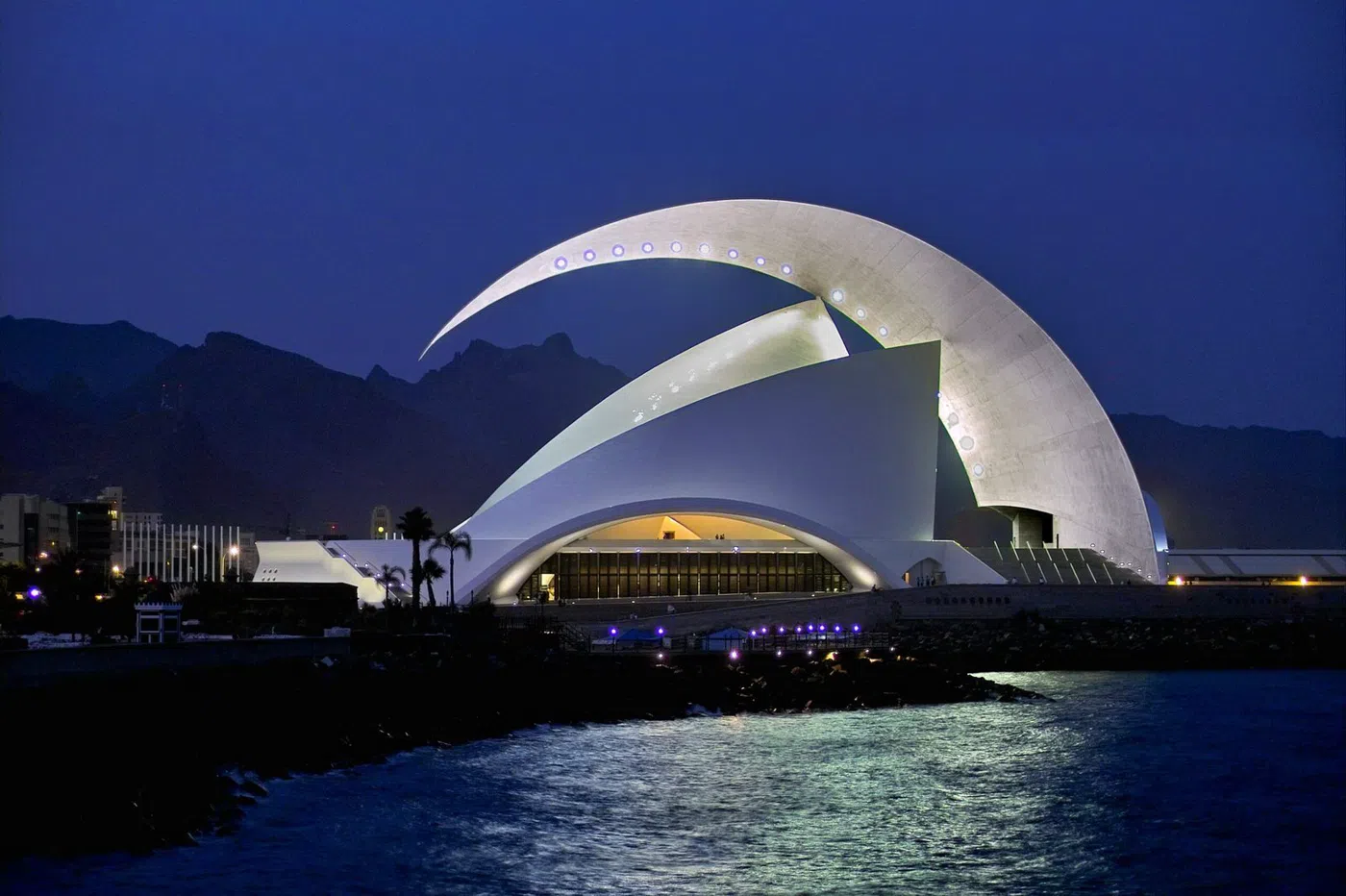
The cranes move first. Long before anyone thinks about lunch, the container gantries at the port are already swinging over the bay, cruise tenders are nudging in alongside them, and the white curve of a Calatrava concert hall sits in the middle of the view like a wave that never got around to breaking. That combination — a working harbour, government offices, serious architecture and no beach at all — tells you most of what you need to know about Santa Cruz de Tenerife. This is the island's capital, not its holiday strip. Lunch doesn't properly start until 2pm, dinner rarely before 9pm, and the rhythm is set by the people who live here rather than by anyone's package itinerary. Stop fighting that clock and the city turns out to be unusually generous.
What Santa Cruz is known for
Santa Cruz is the administrative and commercial capital of Tenerife, and it shares the Canary Islands' capital status with Las Palmas, the two cities alternating every four years — a piece of archipelago diplomacy that tells you how seriously the paperwork is taken here. The city looks the part, too. Its centre of gravity is Plaza de España, rebuilt over the old Castillo de San Cristóbal and anchored by a long, shallow reflecting pool that hands the sky straight back to you, flanked by the Cabildo.
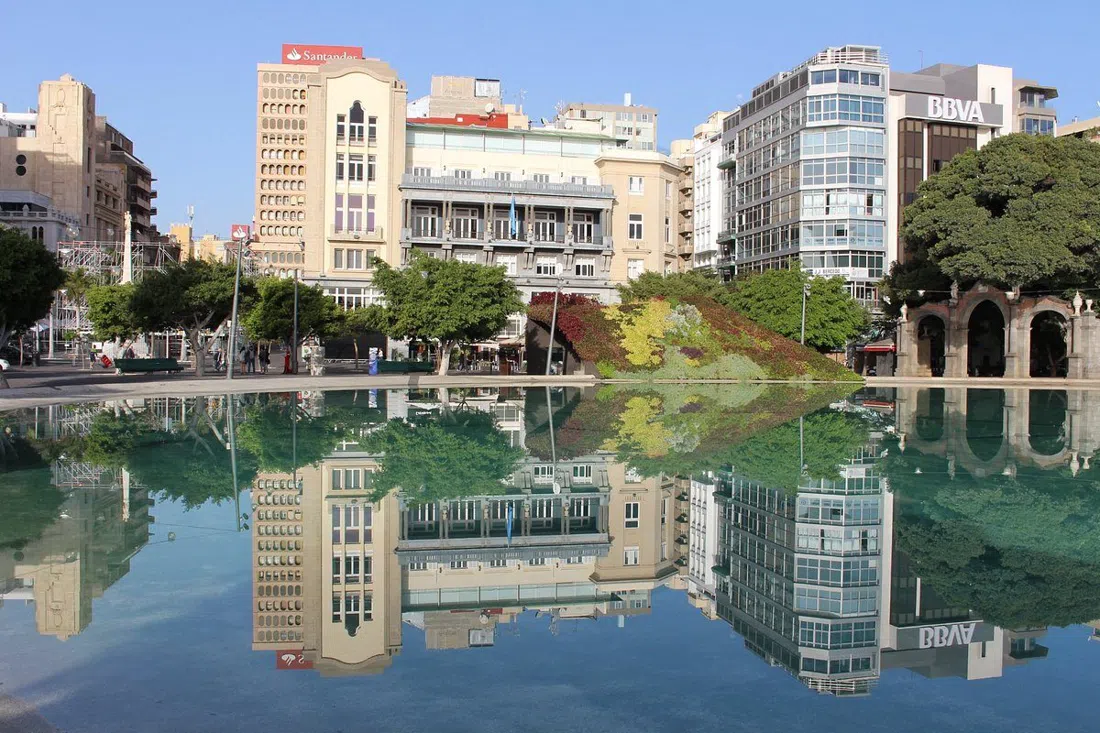
Stand there at nine in the morning and you'll see the city's real character before any guidebook explains it: office workers cutting diagonally across the square, folders under arms, and market porters a few streets away hauling crates into the halls of the Mercado de Nuestra Señora de África. The terraces on Calle de la Noria that will be heaving at half past two are still wiping down chairs. Nothing is performing for you. That's the appeal.
Which makes Santa Cruz a specific kind of destination. It suits travellers who want a real Spanish city — working shops, a working market, offices, errands — rather than a resort frontage. It suits cruise passengers and short-stay visitors enormously, because the entire centre unfolds on foot from the port. It suits anyone planning to base themselves centrally and fan out across the island by tram and bus. And it rewards the sort of person who'd rather sit down to eat at 2pm with everyone else than graze an all-day tourist menu at noon. Be honest with yourself about two things, though. If you want sand outside the hotel door, this isn't it — the nearest proper beach, Playa de Las Teresitas, is a bus ride rather than a stroll. And if you're chasing Tenerife's big-room club scene, that lives in the south, in Playa de las Américas, not here.
Where to eat and drink
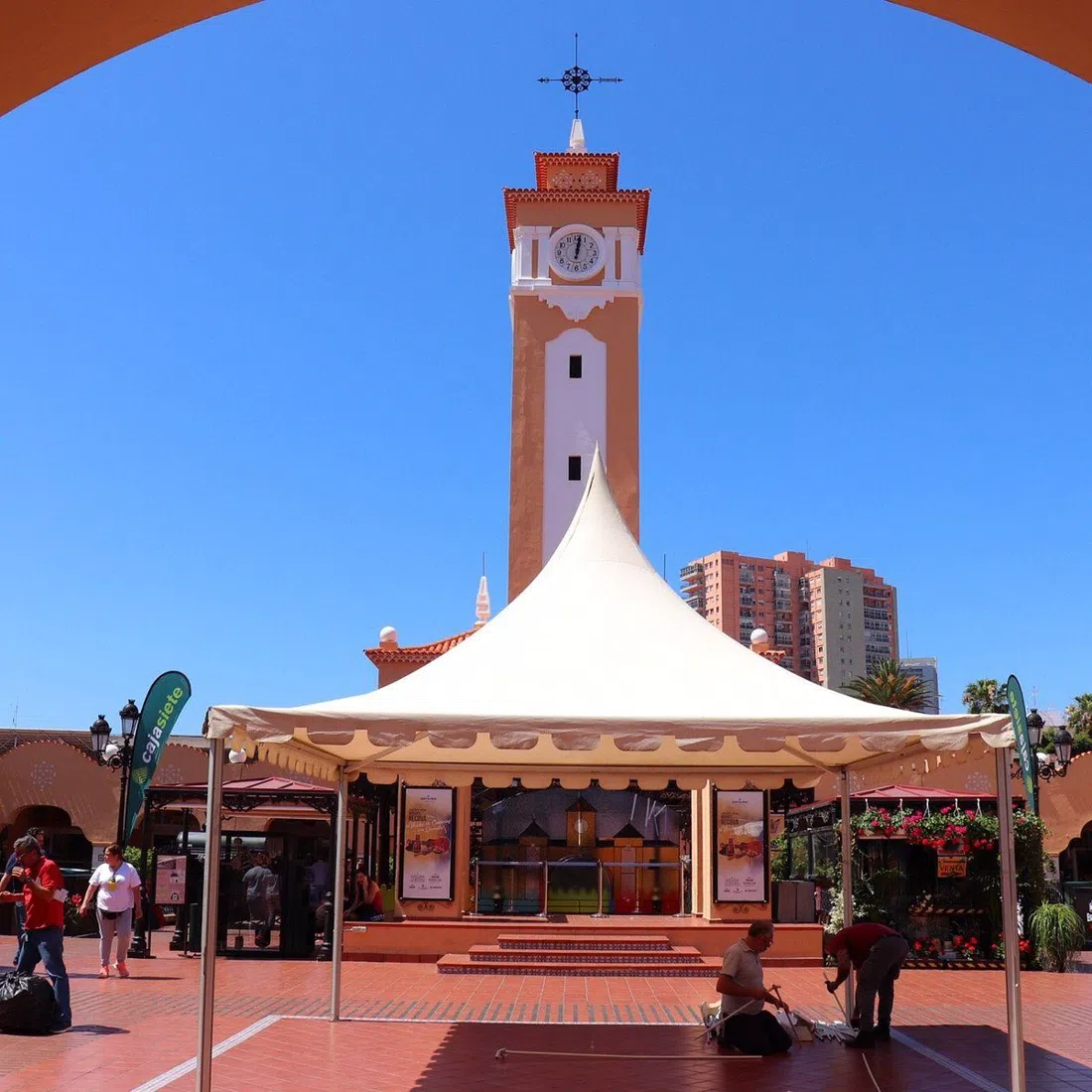
The single best decision you can make in Santa Cruz is to plan your day around Spanish hours instead of your own. Everything eases once you do, and the obvious place to begin is the Mercado de Nuestra Señora de África on Avenida de San Sebastián — the city's working produce and seafood market since the 1940s, with more than forty-five indoor stalls of Canarian fish, meat, cheese and fruit. It is a mornings-only proposition, so treat it as a breakfast-to-late-morning errand rather than an afternoon idea. The trick most visitors miss is the basement bar, where you can eat what you've just bought upstairs, fish and all, surrounded by people doing their actual weekly shop.
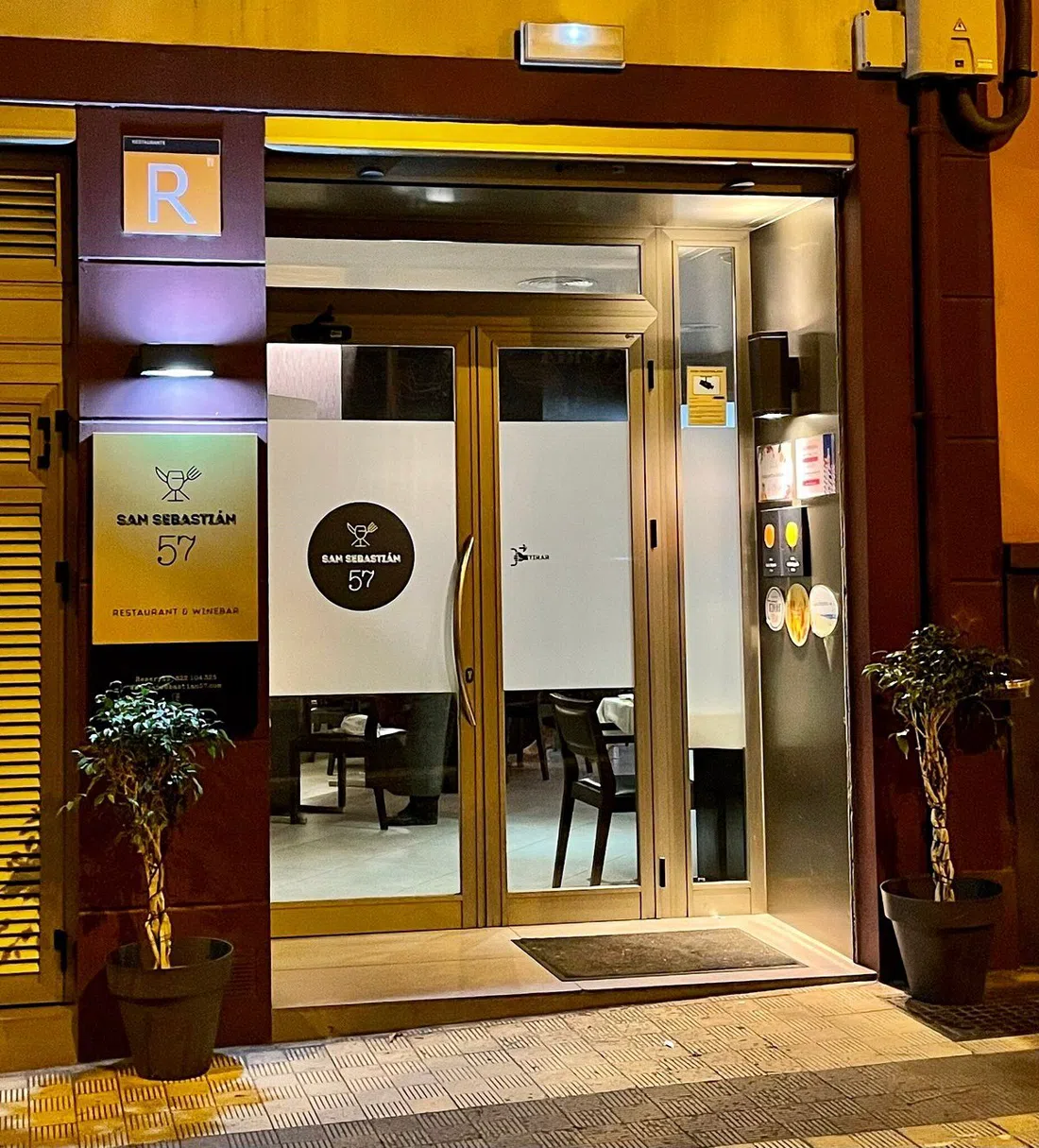
Steps from the market, San Sebastián 57 is where the city's cooking gets ambitious without getting silly about it — a Bib Gourmand in the 2026 Michelin Guide España for modernised Canarian cooking, the sort of place where island ingredients you've just seen piled on a market slab come back refined and plated. Budget somewhere in the €35–50 range for dinner here, which is the local definition of a splurge and would be a rounding error in most European capitals.
For the other end of the spectrum — the end you'll probably return to twice — walk back towards Plaza de España and find Bodeguita Canaria. No frills, no concept, just traditional Canarian cooking: ropa vieja, papas con carne, fried calamares. A Canarian lunch in this city generally runs €12–20, which buys you considerably more food than that number suggests. In the same spirit but with its own long-standing following, La Hierbita trades on two things locals will tell you about unprompted: the arroz negro, and portions calibrated for people who have been working all morning.
When you want something looser and later, Santo Pecado Gastrobar leans cocktail-forward, with a terrace on a quiet plaza and a kitchen that would rather send out croquetas and tuna tartare than another identical plate of classic tapas. It's the natural bridge between a late lunch and a night that's only just deciding what it wants to be.
Nightlife
Santa Cruz keeps its nights in one place, and it's not a secret: Calle de la Noria, in the old quarter, carries almost the entire going-out scene on its shoulders. The street starts filling early in the evening with locals winding down after work, and by the time visitors arrive to start dinner the two groups are thoroughly mixed, elbow to elbow on terraces that bleed into one another.
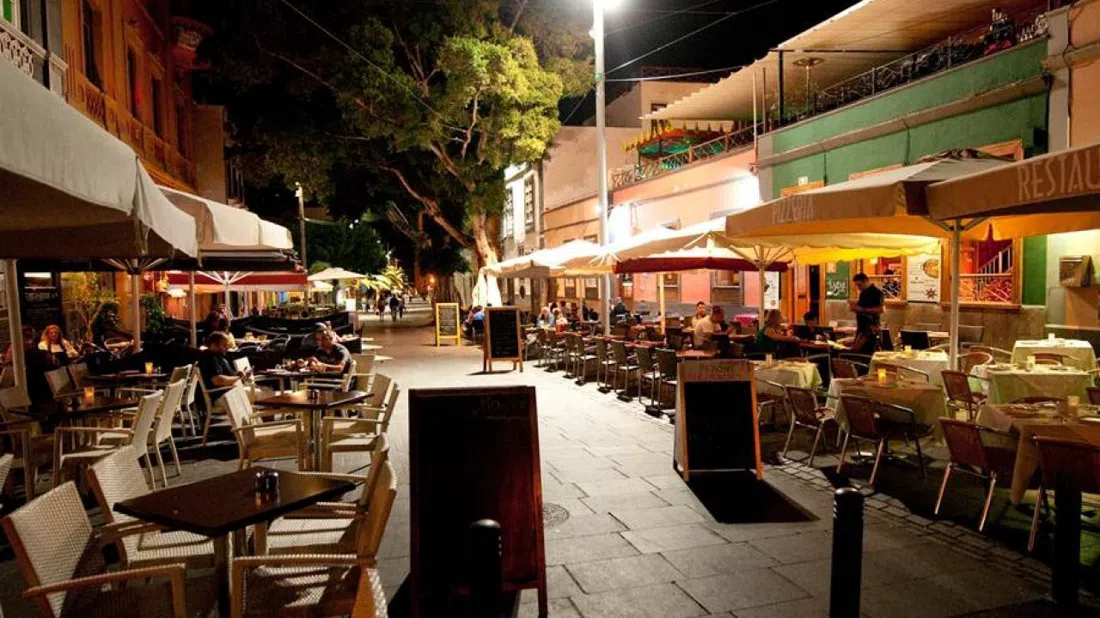
Understand what it is and isn't. This is a crawl of close-together bars and restaurant terraces rather than a club district — you move along the street, not from venue to venue across the city, and the atmosphere is conversational rather than cavernous. It's also reassuringly walkable after dark. Santa Cruz is a working Spanish city and generally safe to wander at night, including around Plaza de España and La Noria; ordinary city sense applies around the market and port when they're busy, and that's about the extent of it.
Things to do
One building draws everybody, and it earns the attention. The Auditorio de Tenerife, Santiago Calatrava's wave-shaped concert hall completed in 2003, rises straight off the harbour in a single white sweep, and it is worth the walk even if you never set foot inside — though inside is where the Symphony Orchestra plays and the Heineken Jazz Festival lands.
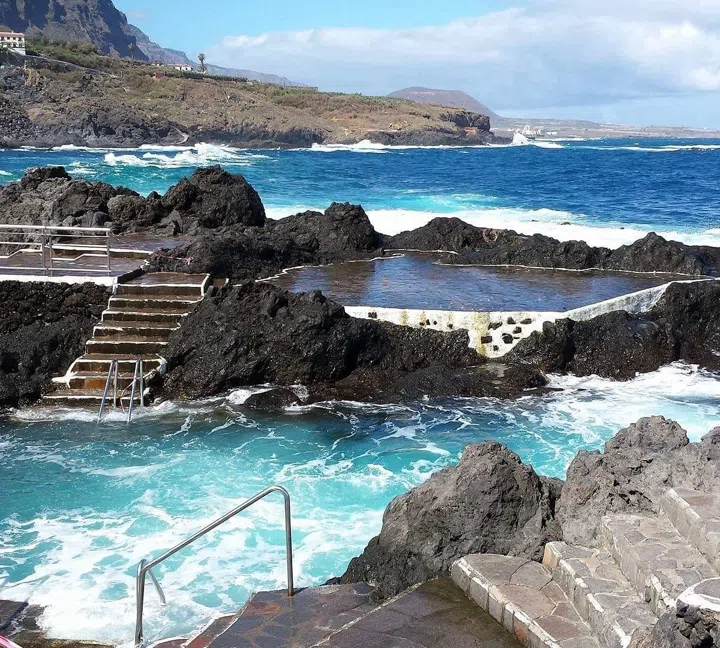
A short walk along the water, Parque Marítimo César Manrique does something no hotel pool can: a seafront saltwater pool complex designed by the Canarian artist César Manrique, all volcanic stone, planting and water held in deliberate conversation with the Atlantic behind it. It is the closest thing the city centre has to a beach day, and arguably the more characterful option.
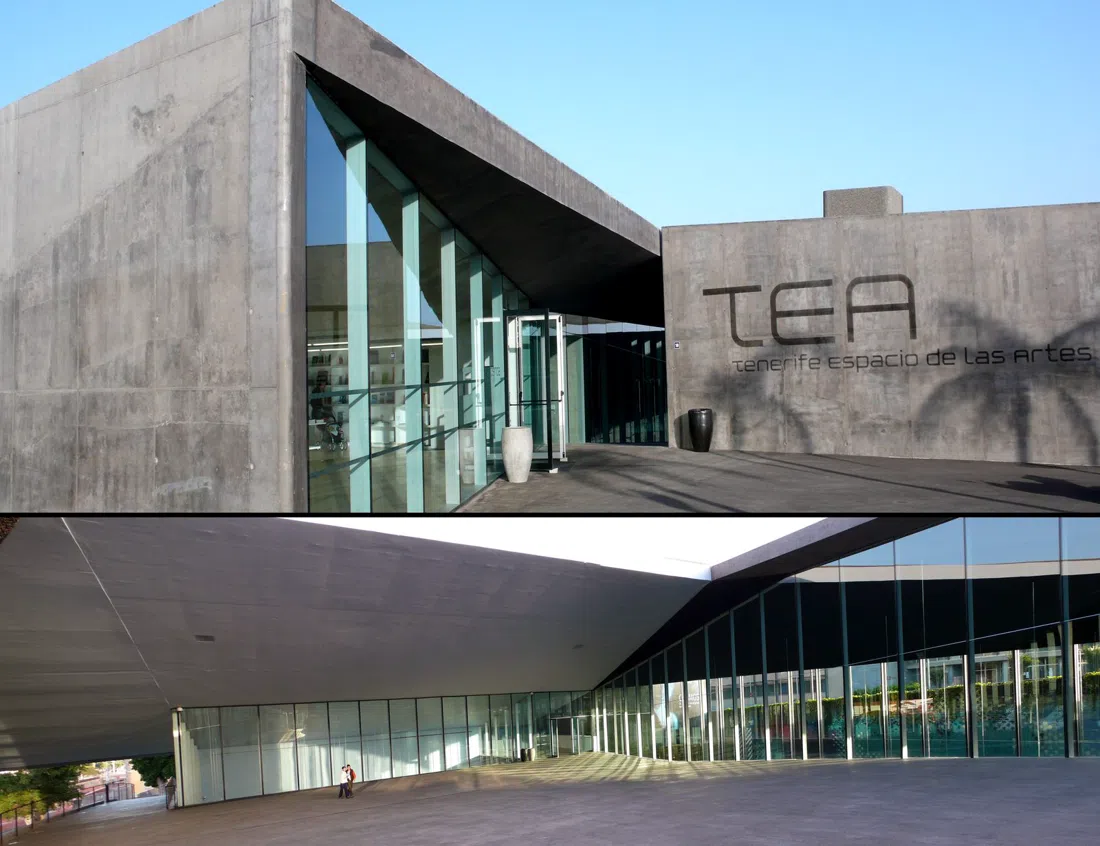
Inland, the cultural weight sits with TEA Tenerife Espacio de las Artes, the contemporary arts centre designed by Herzog & de Meuron, which runs rotating exhibitions alongside a photography archive and a cinema. Give it an afternoon, especially if the light outside has gone flat and bright.
Next door, Parque García Sanabria is the city's main park and the best free thing in Santa Cruz — deeply shaded, dotted with sculpture, and full of people who clearly treat it as an extension of their living rooms. Pair the two: art indoors, then a bench and a slow half-hour outdoors.
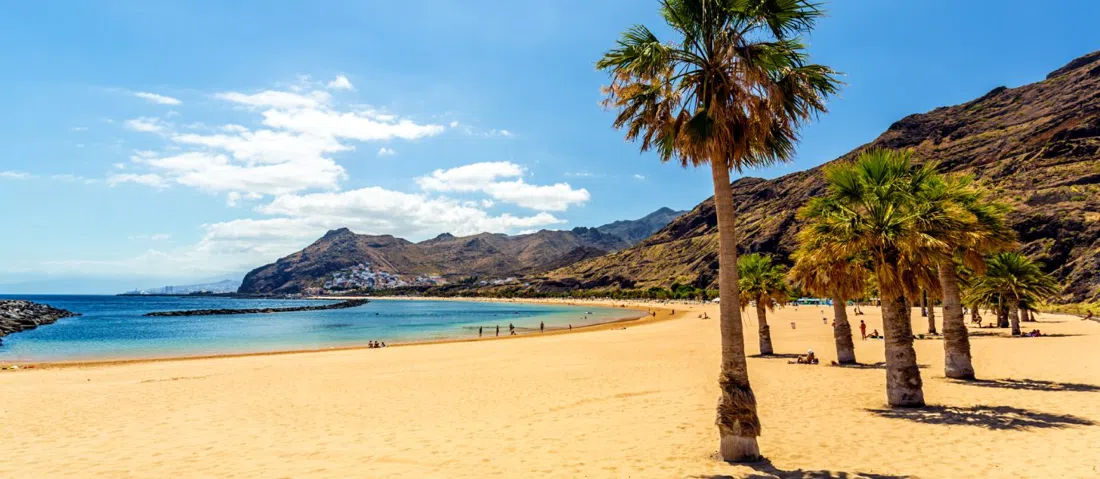
And when you do want sand, you go and get it. Playa de Las Teresitas, the golden imported-sand beach in San Andrés, sits about fifteen minutes from the centre by bus, which makes it an easy half-day rather than a production.
Shopping
Calle del Castillo is the city's shopping spine, a pedestrianised run from Plaza Candelaria to Plaza Weyler lined with Spanish and international clothing chains and threaded with smaller independents between them. The name is a ghost: it remembers a castle that stood until 1929, and the street has been the commercial main street ever since.
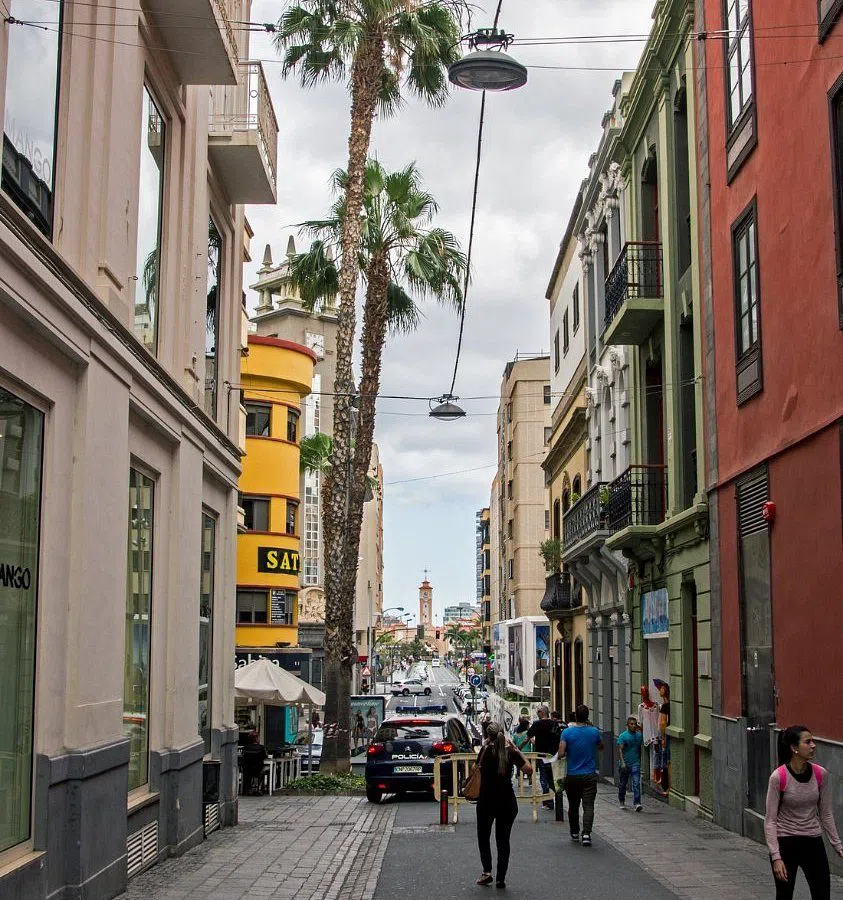
Walk it once end to end for the shop-window version of the city, then double back for whatever caught your eye — it's short enough that nothing is a commitment. For anything edible to take home, the Mercado de Nuestra Señora de África remains the better errand: Canarian cheese, fruit and fish from people who sell it to their neighbours.
Where to stay in Santa Cruz de Tenerife
The historic centre around Plaza de España and Plaza Weyler is the obvious base, and the logic is almost geometric: the market, the Auditorio, Calle del Castillo and the Noria bars all sit inside a fifteen-minute walk, and you're also closest to the tram and to the Intercambiador for day trips out of the city. The Iberostar Heritage Grand Mencey is the city's grande-dame address if you want that kind of stay. More broadly, rates here sit below the south-coast resorts, which is one of the quietly persuasive arguments for choosing a capital over a strip.
Getting around
You can do almost all of Santa Cruz on foot. The centre is compact and flat enough that Plaza de España to the Auditorio, or Plaza de España to Calle del Castillo, is a 10–15 minute walk either way — a rare thing on an island of ravines and switchbacks. When you want to go further, the Metropolitano de Tenerife tram, Line 1, leaves from right beside Plaza de España and runs through the centre up to La Laguna in around forty minutes, which makes the old university town a genuinely casual evening out rather than an excursion. TITSA buses from the Intercambiador handle the rest: La Laguna, the beaches, and day trips across the island.
Getting here depends entirely on which airport your flight picked. Tenerife North (TFN) is the short transfer, about 15–20 minutes by taxi or bus. Tenerife South (TFS), where most package and budget flights land, is closer to an hour by car or bus — worth checking before you book a transfer, not after. Cruise and inter-island ferry arrivals have the easiest time of anyone, stepping off essentially into the centre. A hire car is genuinely optional: useful for reaching Teide or the west coast on your own schedule, and otherwise a parking problem you've paid for.
24 October 2026